
Plan Your Outer Hebrides Road Trip
Planning the Outer Hebrides road trip can feel daunting at first. There’s a lot of information online, plenty of opinions, and no shortage of suggested itineraries – many of which try to cram far too much into too little time.
This page is here to simplify the process.
Rather than throwing you straight into a rigid day-by-day plan, we’ll walk through how to plan the Outer Hebrides properly – helping you make the key decisions that shape a great trip, avoid common mistakes, and choose the approach that suits you.
If you’re still deciding whether this route is right for you, start with our Outer Hebrides overview first. If you’re ready to plan, you’re in the right place.

How Visiting The Outer Hebrides Really Works
The Outer Hebrides isn’t a road trip that rewards rushing. On paper, daily driving distances can look manageable – but in reality, road conditions, scenery, weather and unexpected stops all slow things down.
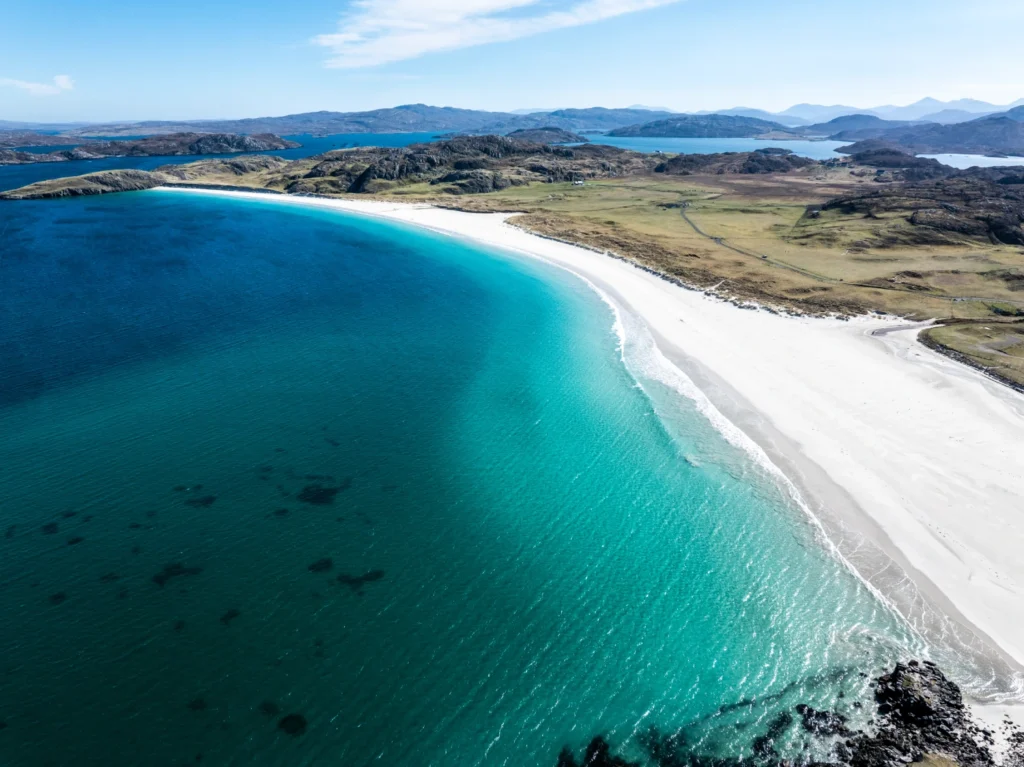
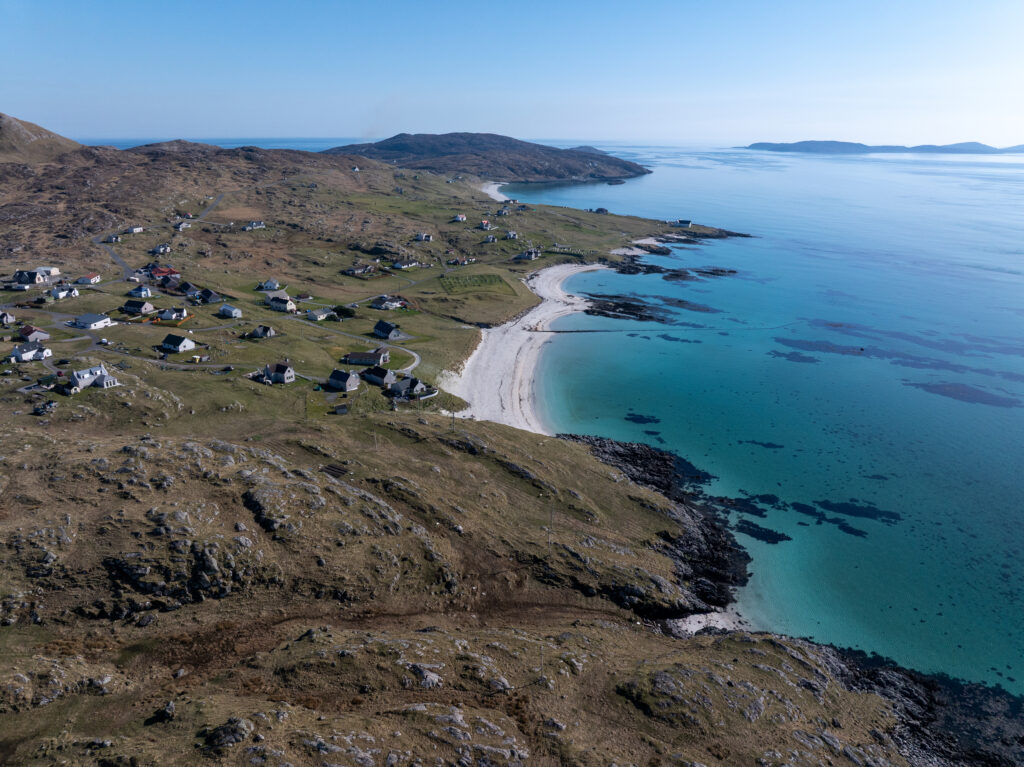
This archipelago is made up of many individual, unique islands, each as diverse and wondrous as the next; a myriad of white sand beaches, tranquil nature reserves and rich historical sites, all connected by single-track roads, scenic causeways and brief ferry crossings. This is what makes the Isles both challenging and appealing for any visitor!
Planning a trip to the Western Isles is less about creating a perfect itinerary and more about understanding:
How long do you actually need
Where flexibility matters
What’s worth booking in advance
What’s better left open
Once you understand how the route flows, the rest becomes much easier!
How Long Should You Allow for the Outer Hebrides?
One of the biggest planning decisions is how much time to give to the route.
As a general guide:
Fast Pace (5-7 Days: Lewis & Harris Only)
- Goal: Capture the dramatic, contrasting landscapes of the largest islands – the rugged mountains of Harris and the sweeping moorlands and archaeological icons of Lewis.
- Experience: Focused on driving the main routes (A859), with essential stops only: the Callanish Stones, Luskentyre Beach, and the Isle of Harris Distillery. Requires pre-booking accommodation and sticking rigidly to a schedule – expect to drive over 50 miles per day (especially if you are using a fixed base, such as Stornoway).
- Merit: Suitable for travellers whose main priority is photography and ticking off the major landmarks, sacrificing time to appreciate the silence and local culture.
Moderate Pace (10 Days)
- Goal: Complete the full chain of islands from Lewis down to Vatersay. This pace allows for a true sense of the cultural and geographical shift between the expansive North (Lewis/Harris) and the diverse South (The Uists/Barra).
- Experience: You can enjoy short hikes (e.g., Clisham), spend a full afternoon on the golden beaches, take a boat trip to St Kilda, and visit local museums. Crucially, this allows time to navigate the CalMac ferry network without stress and spend around 2 nights on most major islands.
- Merit: This is a timeframe we could not recommend enough – it provides the necessary time to fully appreciate the unique Gaelic culture, history, and the extraordinary natural beauty without feeling rushed.
Slow Pace (14+ Days)
- Goal: True escape from the mainland and an opportunity for deep cultural immersion. Ideal for those interested in birdwatching, traditional Gaelic music, or textile arts.
- Experience: Less than 50 km per driving day. Spend 3-4 nights on key islands like North Uist or Barra. This allows for day trips to smaller outliers (like the island of Grimsay), long coastal walks, and the chance to attend local events and art workshops. Accommodation may include traditional thatched “blackhouses”, renovated manors and remote B&Bs.
- Merit: The ultimate way to experience the islands’ slower pace of living. It offers the chance to forge genuine connections with locals and discover countless hidden crofting communities and machair plains that are off the beaten path.
If there’s one piece of advice we give again and again, it’s this:
Slower travel almost always leads to a better experience.
Choosing the Right Direction & Pace
Accessing the Outer Hebrides with your vehicle primarily involves taking a ferry operated by Caledonian MacBrayne (CalMac). The two main vehicle ferry routes from the Scottish mainland are Ullapool to Stornoway (Isle of Lewis) and Oban to Castlebay (Barra). A third option connects Uig (Isle of Skye) to Tarbert (Harris) or Lochmaddy (North Uist), offering a quicker crossing for those already touring the Inner Hebrides.
Reservations are essential, especially during peak season, as space for vehicles is limited. We recommend booking well in advance and checking the CalMac website for the most current timetables and fare information.
Depending on the route, you may have options around:
Direction of travel
Your starting point
While there’s no single “correct” way to do the Outer Hebrides, certain approaches work better depending on:
Ferry timings
Seasonal daylight
Your travel style
This is where a little planning up front can save a lot of frustration later.
Campervan or Car: What Works Best in the Hebrides?
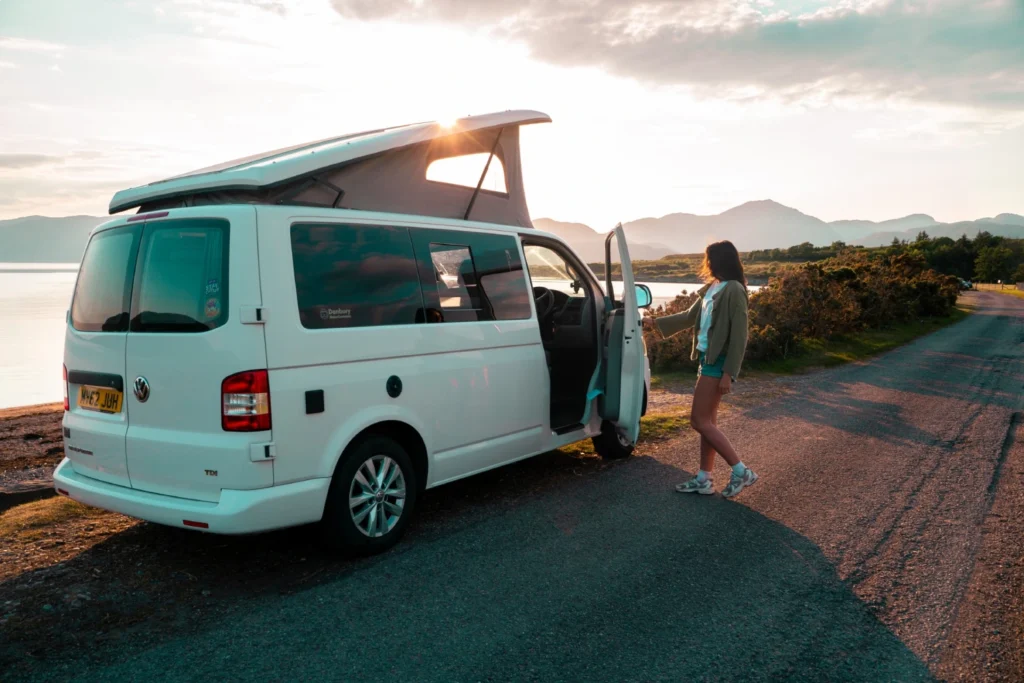
Whether you opt for a standard car or a smaller campervan (e.g., a VW Transporter, Ford Transit, or similar high-top van conversion), navigating the islands requires awareness and courtesy.
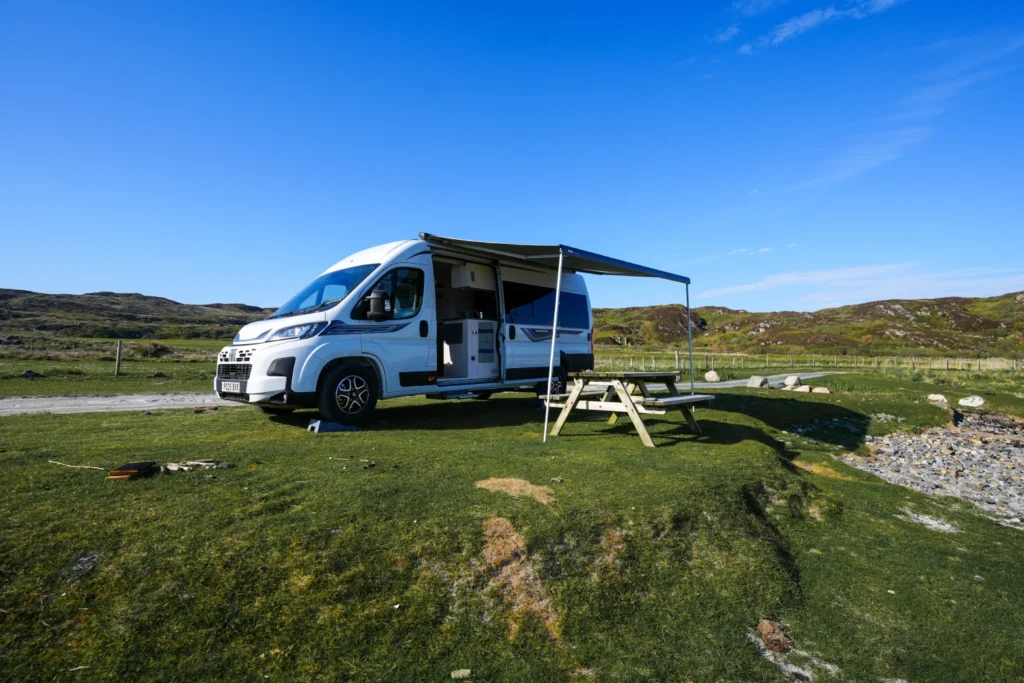
Travelling by Campervan
Campervan travel suits the Hebridean environment well if you value:
- Ultimate Flexibility: Remove fixed accommodation stresses and timings from your itinerary.
- Cost Savings: Removes the reliance on the limited island accommodation options and dining costs.
- Authentic Experiences: Your mobile home ensures a more immersive experience, allowing you to soak in the unique island culture and landscape.
- Creature Comforts: Your own space, bed, and kitchen facilities always travel with you, an essential given the unpredictable weather!
However, travelling by campervan in the Outer Hebrides requires more awareness of:
- Road Challenges: Single-track roads are common, demanding careful use of passing places and patience.
- Weather and Wind: High-sided vehicles are extremely susceptible to the strong coastal winds, especially on causeways.
- Wild Camping Etiquette: While often permissible, responsible parking is paramount. The islands are sensitive environments, and inappropriate parking or waste disposal is frowned upon.
- Ferry Logistics/Costs: Vehicle length and weight directly impact ferry reservation costs and availability, which can be highly competitive in summer.
Travelling by Car/Motorcycle
Travelling by these offers:
- Speed and Agility: Easier to navigate narrow single-track roads and park in small settlements.
- Accommodation Variety: A reliance on fixed B&Bs or boutique hotels offers guaranteed warmth, comfort and peace of mind.
- Ferry Ease: Generally cheaper and easier to reserve space on ferry crossings.
It does, however, reduce:
- Spontaneity: Requires booking accommodation (B&Bs, hotels, etc.) well in advance, especially in peak season, significantly reducing flexibility.
- Your Planned Budget: Combining car rental and accommodation typically costs more overall than a campervan rental, especially when factoring in dining out more frequently.
- Your Inventory: Reduced ability to self-cater or carry extensive gear.
- Protection From Elements (Motorcycle): The Hebridean weather is famously unpredictable and often wet – motorcyclists must be prepared for rain and strong winds!
What You Actually Need to Plan in Advance
You don’t need to book every night or activity before you leave. In fact, overplanning often makes trips more stressful.
What is worth thinking about early includes:
Overall trip length
Vehicle choice
Ferry crossings
Accommodation strategy during busier periods
Any must-do experiences
Everything else can usually stay flexible, especially if you’ve chosen a realistic pace!
Common Mistakes People Make In The Hebrides
After years of travelling this route and speaking to people who’ve done it, the same issues come up again and again:
Trying to cover too much ground
Underestimating driving times
Booking accommodation too rigidly
Not allowing for weather changes
Choosing an itinerary that doesn’t match their travel style
Being aware of these pitfalls before you go can completely change how your trip feels.

Ready to Take the Next Step?
You don’t need to have everything figured out at once. Start with a clear understanding of the route, choose a pace that feels comfortable, and build from there.
From here, you can:
👉 Explore our Outer Hebrides itineraries