
The Wild Atlantic Way - Your Campervan Guide
The Wild Atlantic Way is Ireland’s epic coastal touring route, stretching over 2,500 kilometres (1,550 miles) along the rugged western edge of the island. For the intrepid traveller, there is no better way to experience its dramatic cliffs, windswept beaches, and charming villages than by campervan!
This mode of transport offers unparalleled freedom, allowing you to chase the cliffside trails, wake up to the sound of the ocean, and truly immerse yourself in the warm Irish hospitality that the Emerald Isle is famous for. This guide provides an essential breakdown for planning and executing a successful campervan journey along the Wild Atlantic Way, covering practicalities, travel advice, and how to respect local customs. It’s time to follow the coast!
If you’re still deciding whether this route is right for you, start with our Wild Atlantic Way overview first.
If you’re ready to plan, you’re in the right place.
Planning Your Irish Campervan Adventure
Vehicle Selection
If travelling from overseas, renting a campervan is the most straightforward option, with a range of sizes to fit your style. Please make sure the rental contract covers mileage for the duration and comprehensive breakdown assistance (essential for rural Irish roads).
Vehicle Size
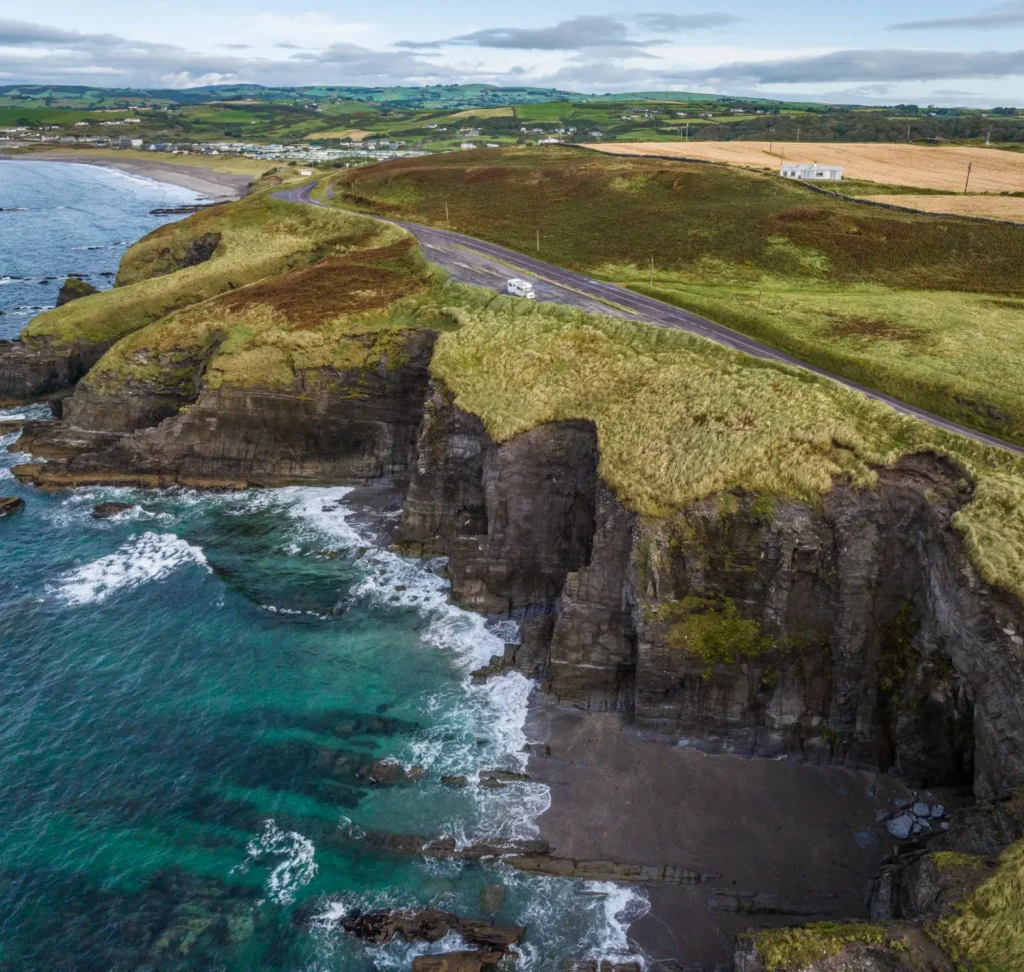
The Wild Atlantic Way driving route is characterised by narrow, winding roads, especially on the peninsulas (such as the Ring of Kerry or Dingle). A smaller, more manoeuvrable campervan (e.g., a VW California-size) is often preferable to a large RV or motorhome, making it easier to overtake oncoming traffic and navigate village streets.
Essential Kit & Supplies
- Rain Gear: Ireland’s weather is famously unpredictable. High-quality waterproof jackets and trousers are non-negotiable.
- Levelling Blocks: Crucial for campervan wheels, ensuring a comfortable sleep on uneven parking spots.
- Cooking Supplies: While pub food is a must, self-catering saves money and allows for flexible mealtimes. Gas canisters are also widely available, particularly in larger towns and hubs.
- Maps (Physical): While GPS is helpful, mobile signal can be intermittent in remote areas. A detailed physical map is a reliable backup!
Services and Logistics
- Water and Waste: Water refill and waste (grey and chemical) disposal facilities are primarily found at official campsites. Plan your route to ensure regular access.
- Fuel: Fuel stations are abundant in towns, but become sparse in remote peninsulas. Refill whenever you are below half a tank.
- Laundry: Many campsites offer laundry facilities, or you can find laundrettes in larger towns.
The Wild Atlantic Way: Route Awareness
While the official route is 2,500km, attempting to cover the entire driving route in a rush is counterproductive. The beauty of this trip lies in taking your time.
Suggested Timelines
Section | Recommended Duration | Key Highlights |
|---|---|---|
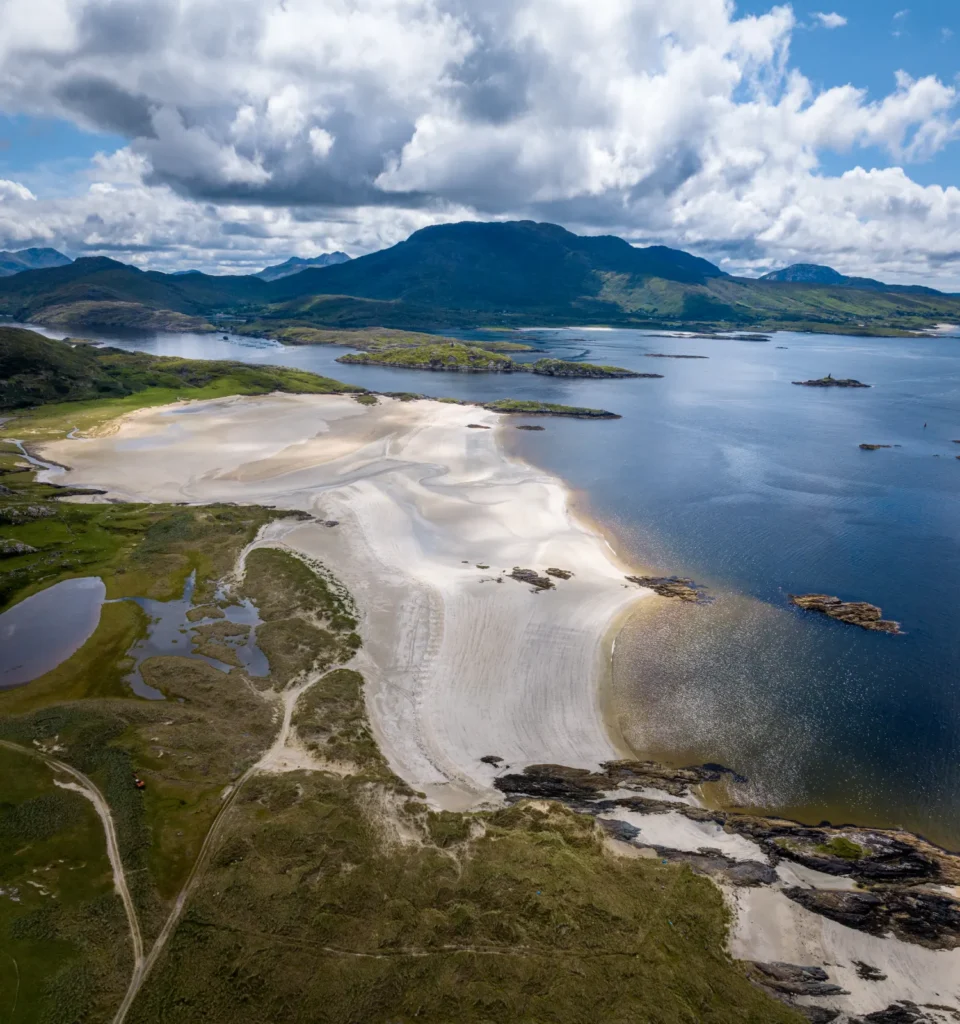
Northern Headlands (Donegal) | 5-7 days | Slieve League Cliffs, Malin Head, Fanad Head Lighthouse |
Surf Coast (Sligo, Mayo) | 4-6 days | Downpatrick Head, Strandhill Beach, Benbulben Mountain |
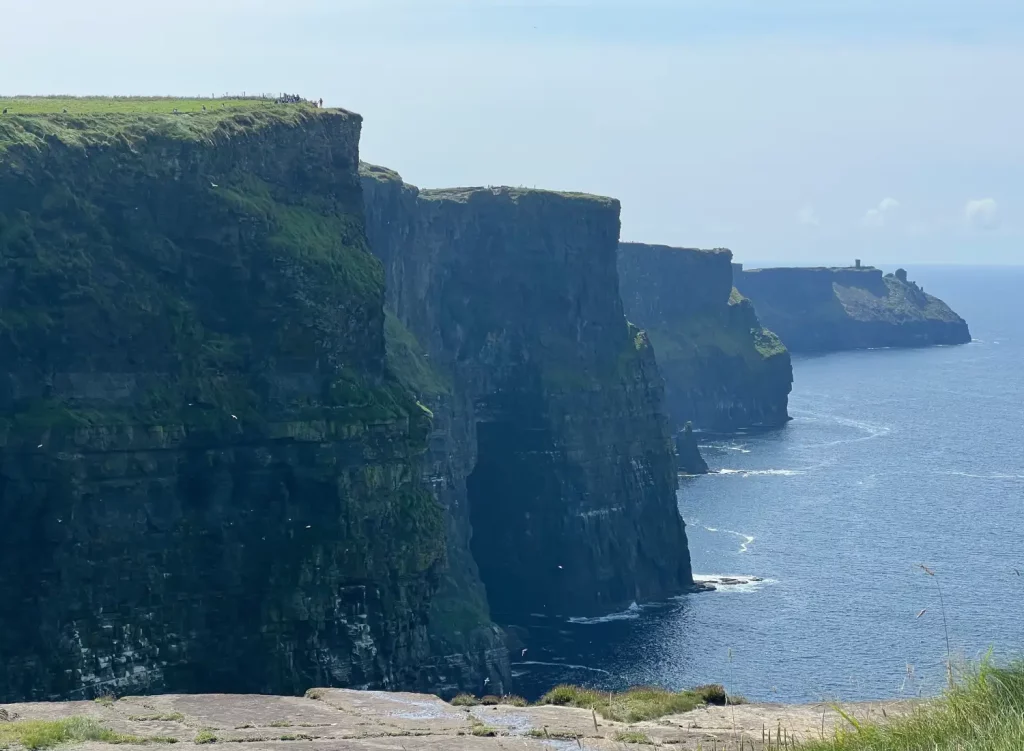
Bay Coast (Galway, Clare) | 5-7 days | Connemara National Park, Cliffs of Moher, Aran Islands (ferry access) |
Cliff Coast (Clare, Kerry) | 4-6 days | The Burren, Dingle Peninsula, Ring of Kerry |
Southern Peninsulas (Cork) | 3-5 days | Mizen Head, Sheep’s Head, Kinsale |
Total Recommended Trip | 3-4 Weeks | Optimal for a thorough experience |
We recommend choosing a section (e.g., the Southwest or the Northwest) if you have less than two weeks, allowing for a deeper exploration rather than a frantic drive!
Driving and Navigation
Driving in Ireland is on the left. Speed limits are measured in kilometres per hour (kph).
Road Type | Typical Speed Limit | Notes |
|---|---|---|
Motorways (M) | 120 kph | Tolls apply on most major routes. |
National Primary/Secondary Roads (N) | 80-100 kph | Good quality, but often single-lane in each direction. |
Regional Roads (R) & Wild Atlantic Way Route | 50-80 kph | Often very narrow, winding, and poorly surfaced. Exercise extreme caution. |
Navigating the Coast
The route is well signposted with the distinctive “Wild Atlantic Way” emblem, usually featuring a blue, wavy line.
Be aware of the following driving challenges:
- Sheep and Livestock: In rural areas, particularly on smaller peninsulas, sheep roam freely. Always slow down immediately and give animals a wide berth.
- Passing Places: On the most minor regional roads, designated passing places (small lay-bys) are used. If you see an oncoming vehicle, the car closest to a passing place must pull in and wait. Always thank the driver who pulled over with a simple wave – it’s a common standard of etiquette.
- Tractors and Farm Machinery: Be patient, you will inevitably get stuck behind a slow-moving tractor! Wait for a safe, designated overtaking zone.
Campervan Guide – Legal Considerations
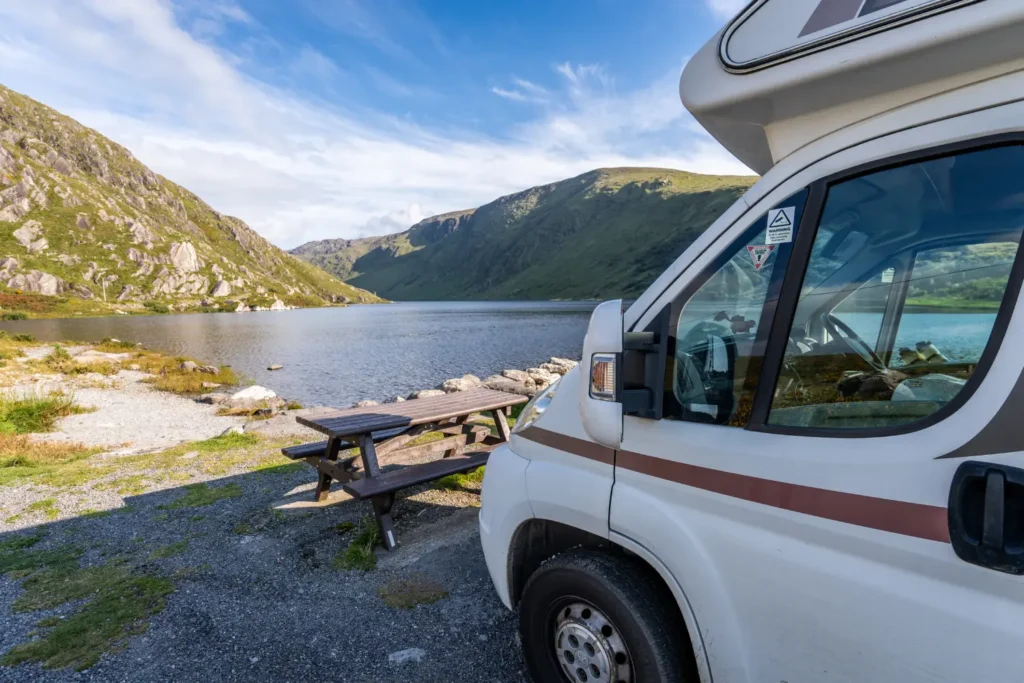
Ireland has evolving rules regarding ‘wild camping’ in a campervan. While it’s generally tolerated in isolated areas, it is essential to be responsible and discreet.
- Campsites/Caravan Parks: These offer reliable facilities (electric hook-up, water, waste disposal, showers). We highly recommend booking ahead during peak season (June-August).
- Designated Overnight Parking: Some local authorities or private businesses, such as certain restaurants, allow overnight parking for a small fee or in exchange for a meal/drink. Always ask permission!
- Wild Camping (Discreet Parking):
- The Golden Rule: Leave absolutely no trace behind. Take all rubbish with you.
- Avoid: National Parks, designated nature reserves, or areas marked with “No Overnight Parking” signs.
- Respect Private Land: Never park on private land or farm entrances without explicit permission from the owner!
The Wild Atlantic Way: Local Customs
The true heart of the Wild Atlantic Way is the legendary hospitality of the Irish people! Showing respect for local customs will enrich your experience immeasurably.
Pub Etiquette
The pub is the social and cultural hub of any Irish village.
- Ordering: Order drinks at the bar. If ordering food, follow the instructions on the table series.
- Tipping: Tipping bartenders for drinks is not mandatory, but 10% is customary for food service or if a bartender provides exceptional, extended service.
- Traditional Music (Trad Sessions): If a session is in progress, find a quiet seat, listen respectfully, and avoid speaking loudly over the music. The music usually starts in the late evening.
- Buying Rounds: If you are drinking with a group of people you know, it is common to buy “rounds” (each person takes a turn buying drinks for the entire group).
Language
While English is the dominant language, particularly in tourist areas, you will encounter An Ghaeltacht (Irish-speaking regions), mainly in parts of Donegal, Galway (Connemara), and Kerry (Dingle).
- Signs: Road signs in Gaeltacht areas will be exclusively in Irish. Learn a few key phrases for day-to-day interactions:
- Dia duit (Dee-a Gwit) – “Hello”
- Go raibh maith agat (Guh row mah ag-ut) – “Thank you”
- Sláinte (Slaun-cha) – “Cheers/Health”
Respecting the Environment
Ireland is protective of its delicate coastline and ancient heritage.
- Fences and Gates: If you open a farmer’s gate (e.g., to access a small beach or walking trail), always close it immediately behind you. This is vital to keep livestock contained.
- Historical Sites: Ireland is dotted with ancient ringforts, dolmens, and ruined castles. These sites are often on private land. Respect signage, and never climb on or take stones from ruins!
- Coastal Viewpoints: Stay strictly behind safety barriers. The cliffs are beautiful but dangerous due to strong, unpredictable winds.
Key Highlights
Beyond the major tourist traps, use your campervan to seek out the following authentic experiences:
- Seaweed Baths: Try a therapeutic seaweed bath, especially in Sligo or Clare, to soothe muscles after a long West Coast drive.
- Farmer’s Markets: Stop at local markets for fresh, artisanal produce, a perfect way to stock your campervan pantry while travelling in Ireland.
- Islands: Take a ferry to one of the islands (Aran Islands, Achill Island, Cape Clear). These offer a glimpse into rugged, natural beauty and a traditional way of life untouched by the mainland pace.
- Storytelling and Lore: Ask locals (especially pub owners or B&B hosts) about local legends, fairy forts, and historical tales. Irish people are natural storytellers, and many anecdotes and stories offer up hidden gems and points of interest for your travels!
Ready to Take the Next Step?
You don’t need to have everything figured out at once. Start with a clear understanding of the route, choose a pace that feels comfortable, and build from there.
From here, you can: