
The Wild Atlantic Way - Your 7-Day Itinerary
The Wild Atlantic Way (WAW) is a gateway to the raw, untamed beauty of Ireland’s western seaboard. Spanning 2,600 km, this itinerary distils the journey into a breathtaking 7-day adventure, focusing on the essential scenic drama, deep-rooted culture, and authentic culinary delights. Prepare for dramatic cliffs, hidden beaches, vibrant traditional music, and food that tastes of the sea and the land.
This itinerary covers roughly the central-southern section of the Way, focusing on highlights from County Clare through counties Galway and Mayo, offering a manageable yet comprehensive week-long experience. If you only have 7 days, we would recommend that you concentrate on ticking off a portion of the entire route, rather than attempting to cram it all into one week!
If you’re still deciding whether this route is right for you, start with our Wild Atlantic Way overview first.
If you’re ready to plan, you’re in the right place.
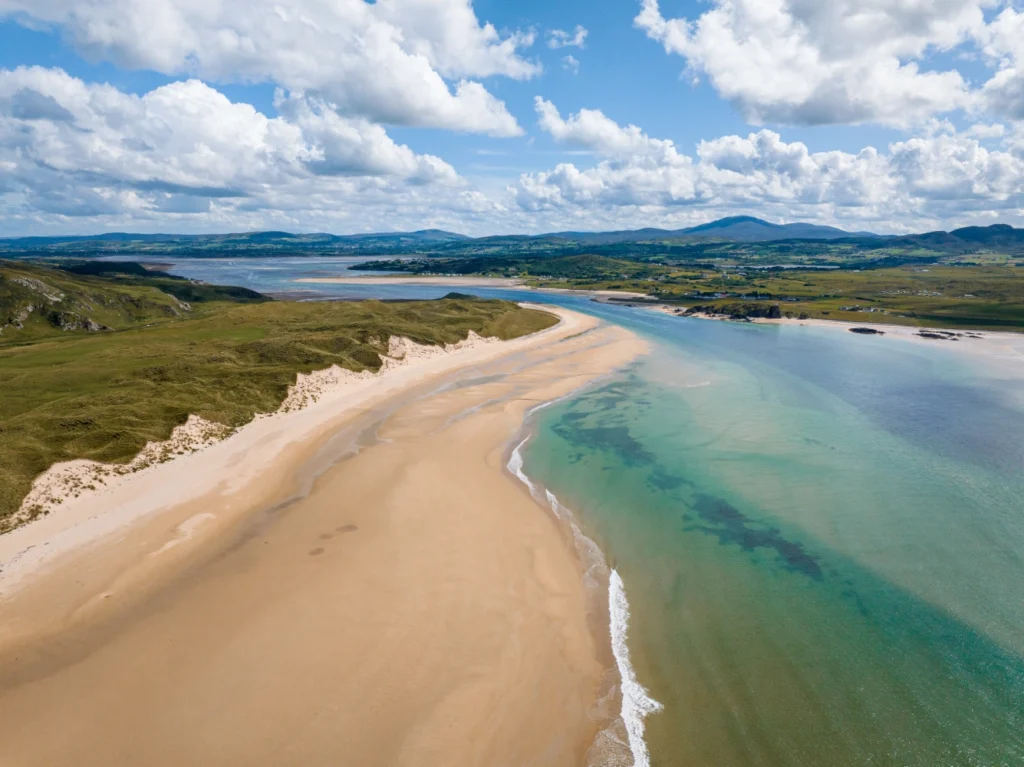
The Wild Atlantic Way: Essential Tips
- Embrace the Weather: You might experience all four seasons in one day. Pack layers, waterproofs, and sturdy walking shoes. The dramatic light caused by the changing weather is part of Ireland’s magic, but be prepared for said change!
- Drive Smart: Roads can be narrow, especially on peninsulas. Drive slowly, respect passing points (pull-ins), and be mindful of sheep and cattle.
- Learn a Few Phrases: Learning a few words of Irish (Dia dhuit – hello) will be greatly appreciated, especially in the Gaeltacht areas.
- Listen to the Locals: Always ask pub staff or B&B hosts where the best traditional music session is happening that night. These spontaneous events are often the beating heart of local communities and culture.
- Book Ahead (Especially Food): In peak summer, popular restaurants and accommodations book up quickly, particularly in smaller popular hubs like Doolin!
The 7-Day Itinerary
This 7-day journey offers a compact, potent dose of the Wild Atlantic Way, mixing the iconic and the hidden, the dramatic and the delightful, ensuring a truly unforgettable Irish adventure!
Day 1 (County Clare)
Experience the iconic natural drama of the Way and the traditional music heart of County Clare.
Morning
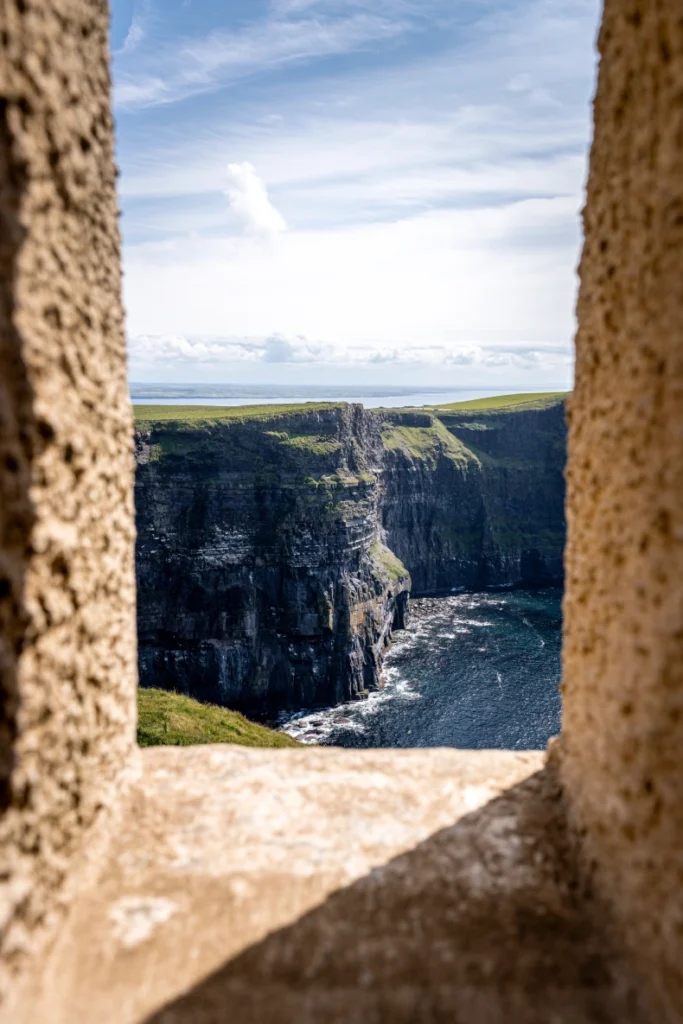
The day begins with the undisputed superstar of the Atlantic Way – the Cliffs of Moher. Arrive early (before 9:30 AM) to beat the main rush and experience the cliffs in relative solitude!
- Scenic Stop: The Cliffs of Moher stand 214m (702 ft) at their highest point, stretching for 8km. The view from O’Brien’s Tower offers a panoramic sweep across the Atlantic, the Aran Islands, and Galway Bay.
- Wildlife Fact: The cliffs are home to over 30,000 pairs of seabirds, including puffins, guillemots, and razorbills!
- Travel Tip: Skip the main visitor centre and walk south towards Hag’s Head for a less crowded perspective and a sense of scale.
Midday
Drive the short distance north to Doolin.
- Scenic Stop: Explore the unique, starkly beautiful Burren region. This Karst limestone landscape, meaning “great rock,” is a geological marvel. Stop at Aillwee Cave or Doolin Cave to descend into the subterranean world carved by millennia of water erosion!
- Lunch Spot: Gus O’Connor’s Pub in Doolin: this legendary watering hole is the epitome of Irish hospitality, serving hearty traditional food (think excellent seafood chowder and local lamb stew) and boasting a history steeped in traditional Irish music (or ‘trad’!).
Afternoon/Evening
- Cultural Stop: Spend the late afternoon relaxing or exploring Doolin’s quirky shops and galleries. Find a spot along the coast to watch the sun set over the Atlantic.
- Dinner Spot: Have dinner in Doolin, perhaps at Fitz’s Bar, and ensure you stay for the evening trad session. These are casual musical gatherings, often unplanned – authentic, vibrant, and utterly essential to any Irish experience.
Day 2 (Aran Islands & Galway City)
Trade the mainland for island ruggedness and finish in the bohemian energy of Galway City!
Morning
Catch an early ferry from Rossaveal (or Doolin, seasonally) to Inishmore (Inis Mór), the largest of the three Aran Islands.
- Travel Tip: Rent a bike (the most authentic way to explore) or hire a local minibus to traverse the island. The landscape is a network of stone walls, small fields, and coastal paths.
- Cultural Fact: The islanders primarily speak Irish (Gaeilge) and maintain a lifestyle rooted in ancient traditions.
Midday
- Cultural Stop: Cycle/drive to Dún Aonghasa, a spectacular semi-circular stone fort perched precariously on the edge of a 100-meter cliff. This Iron Age fort is one of the most important prehistoric sites in Europe.
- Lunch Spot: Grab a simple, hearty lunch at one of the small cafes or pubs near the main village of Kilronan or at the foot of Dún Aonghasa. Try some traditional Irish soda bread or a simple sandwich that you can eat on the go.
Afternoon/Evening
Take the late afternoon ferry back to the mainland and drive to Galway City (approx. 40 minutes from Rossaveal).
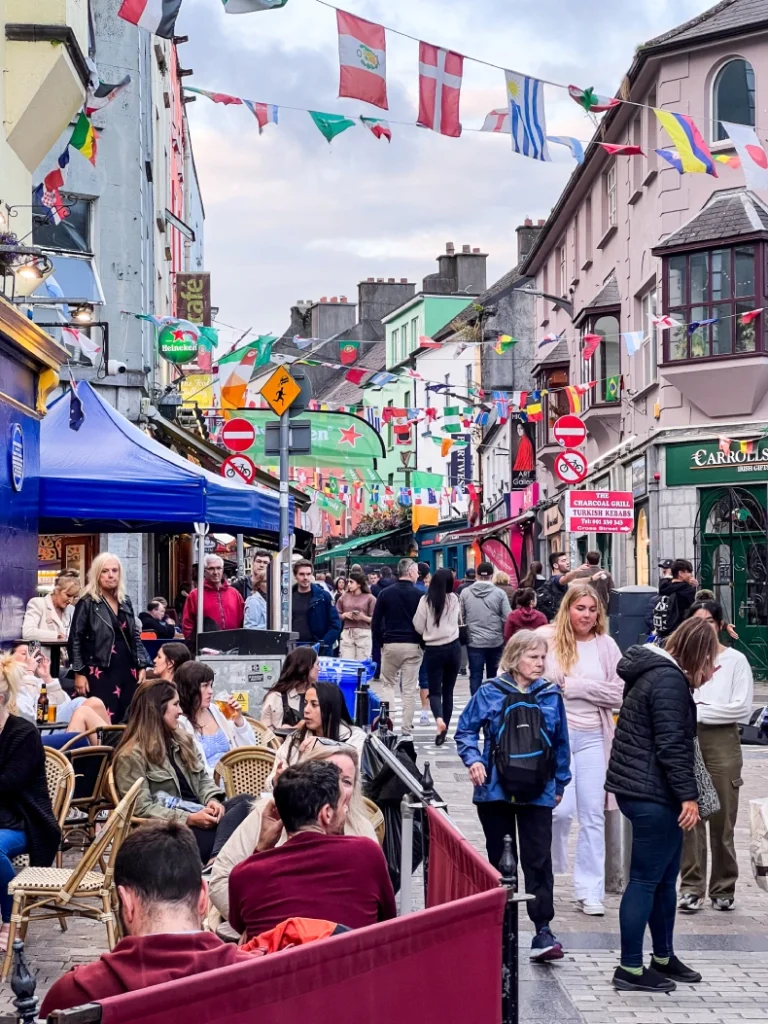
- Cultural Stop: Explore the lively lanes of Galway’s Latin Quarter, famous for its colourful shop fronts, buskers, and street art. Walk down Quay Street and visit the Spanish Arch, a remnant of the city’s medieval trading past.
- Dinner Stop: Dinner at Ard Bia at Nimmos near the Spanish Arch for modern Irish cuisine with a focus on local ingredients, or enjoy fresh oysters and a pint at Moran’s Oyster Cottage just outside the city (if you fancy a short drive).
- Cultural Fact: Galway is known as the ‘City of Tribes’, referring to the 14 merchant families who dominated political, commercial, and social life from the 13th to 17th centuries!
Day 3 (County Galway)
Drive through the stark, beautiful wilderness of Connemara, a region defined by bogs, mountains, and the Atlantic.
Morning
Drive west from Galway City into the mountainous wilderness of Connemara.
- Scenic Stop: Drive the Sky Road loop near the charming town of Clifden. This narrow, winding coastal route offers elevated views over Clifden Bay, the islands, and the rugged interior. Stop at the high viewpoint for incredible panoramas.
- Cultural Stop: Spend time in Clifden, the “Capital of Connemara.” Browse the independent craft shops and art galleries.
Midday
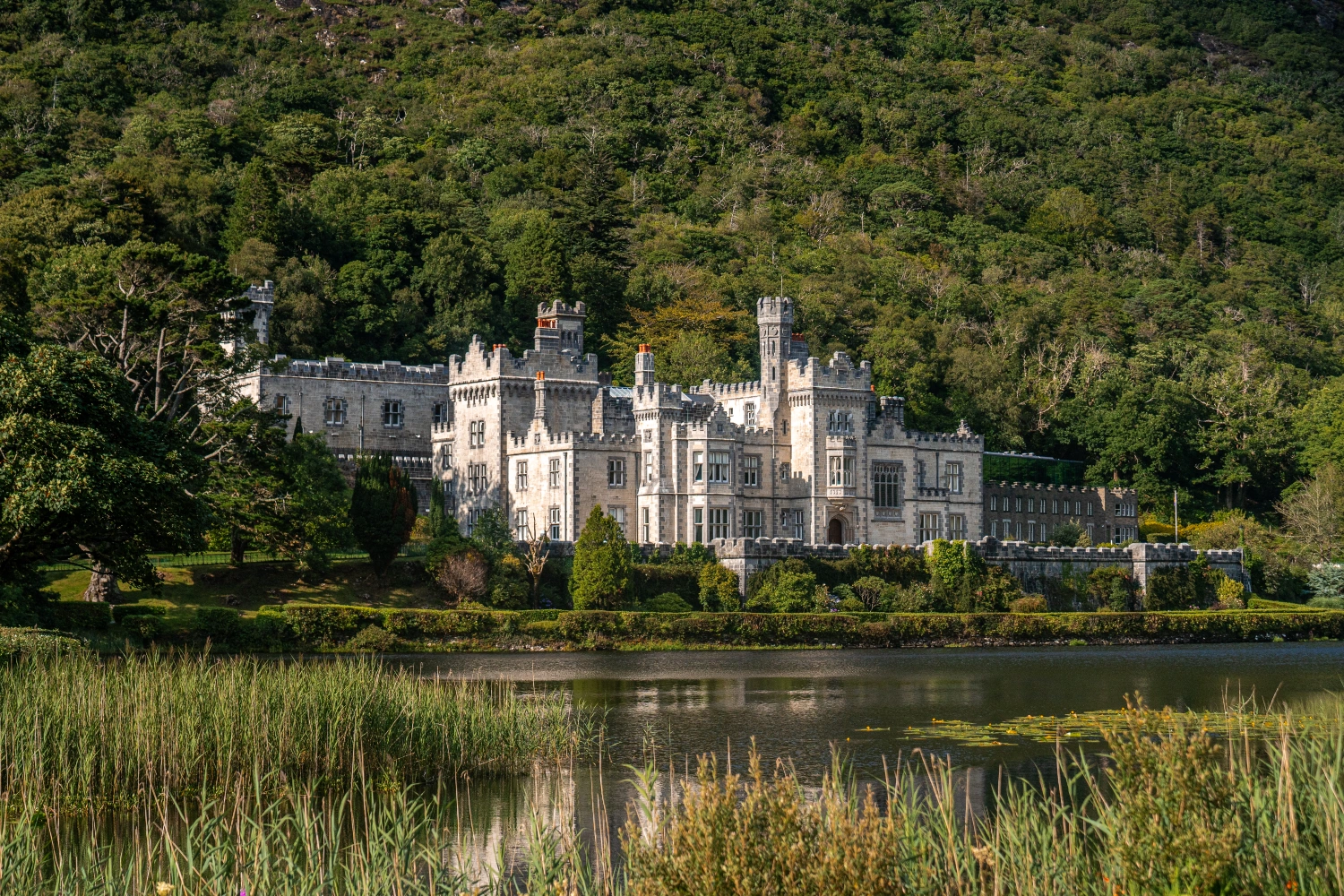
- Historic Stop: Visit Kylemore Abbey & Victorian Walled Garden – originally built as a private residence, it features beautifully restored rooms and a serene Gothic Church. The Victorian Walled Garden is a horticultural masterpiece, especially vibrant in spring and summer!
- Lunch Spot: Enjoy lunch at the Abbey’s cafe, which often uses produce grown in the walled garden.
Afternoon/Evening
Continue driving north, soaking up the Connemara National Park landscape.
- Scenic Stop: Explore the remote Renvyle Peninsula for secluded beaches and views of the Atlantic.
- Travel Tip: Drive the scenic route through the Irish-speaking (Gaeltacht) area, listening to the regional Irish radio for an added layer of cultural authenticity.
- Dinner Spot: Head to Paddy Coyne’s Pub in Tullycross (Renvyle Peninsula). This traditional pub offers excellent seafood and a warm, genuine atmosphere, often featuring local musicians.
Day 4 (County Mayo)
Transition from the mountains of Connemara to the historic coast of Mayo, dominated by Clew Bay and Croagh Patrick.
Morning
The drive from Connemara into County Mayo is spectacular.
- Scenic Stop: Pass through Delphi Valley and the village of Leenane, situated at the head of Killary Harbour – Ireland’s only fjord!
- Cultural Stop: Consider taking a Killary Fjord boat tour to see mussel and salmon farms and enjoy the dramatic mountain scenery from the water.
Midday
Drive north toward Westport, dominated by the conical shape of Croagh Patrick.
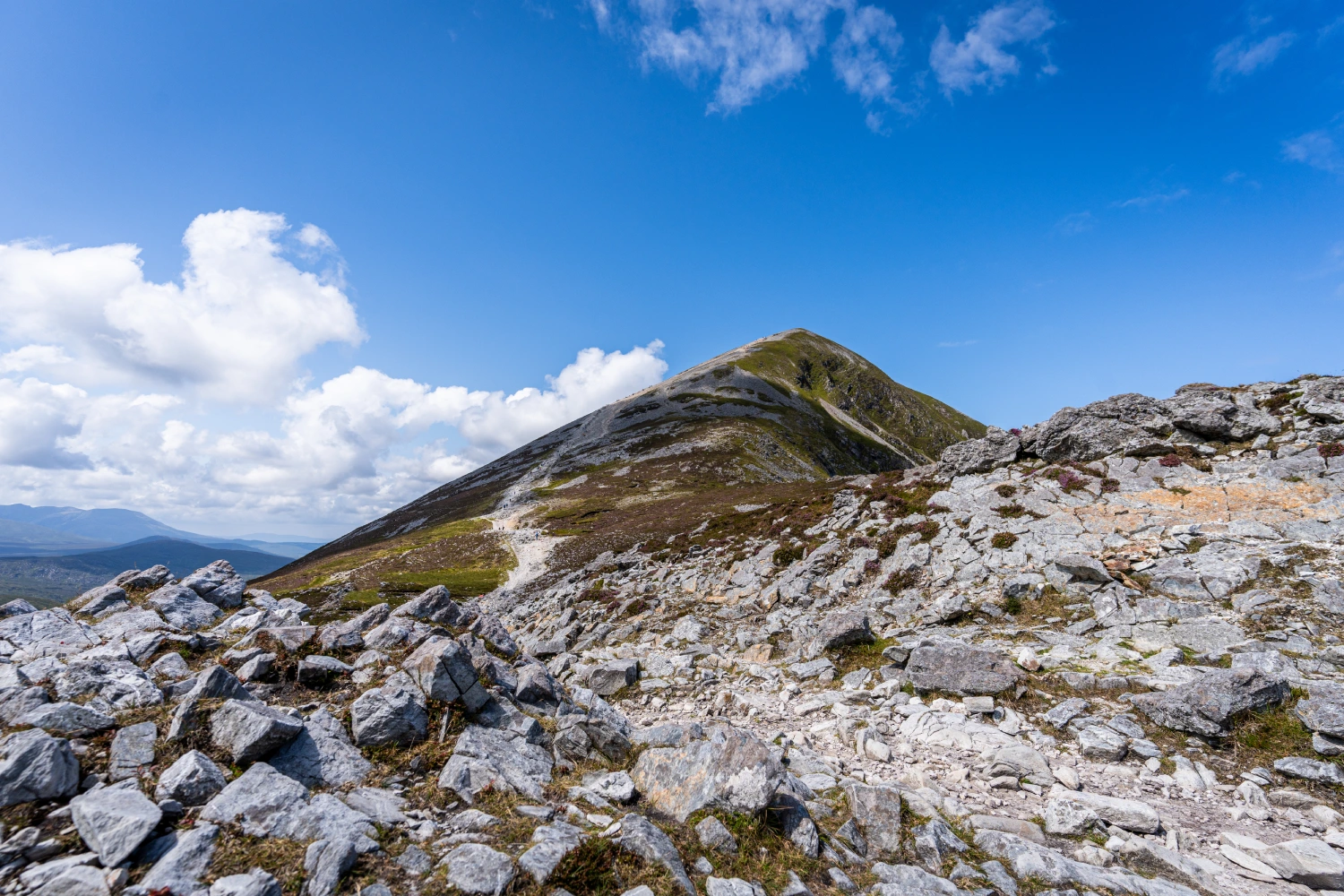
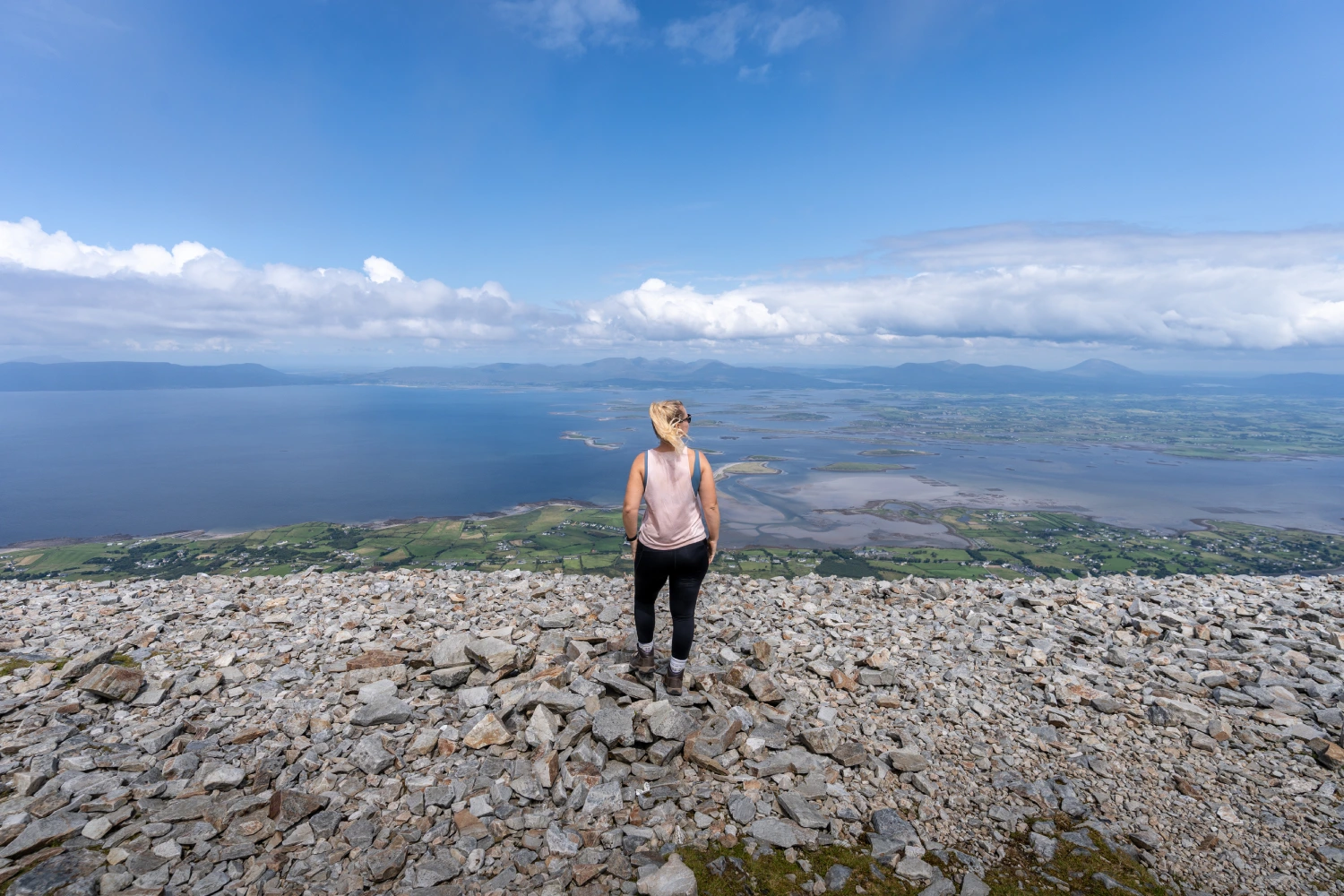
- Scenic Stop: Croagh Patrick, or “The Reek,” is Ireland’s holy mountain, a site of pilgrimage. While climbing the mountain takes a full day and is challenging, the views from the base car park across Clew Bay are stunning.
- Lunch Spot: Lunch in Westport. The town is a charming heritage town known for its Georgian architecture and vibrant atmosphere. Try Matt Molloy’s Pub (owned by the Chieftains musician) for a classic pub lunch.
Afternoon/Evening
- Cultural Attraction: Visit Westport House, a historic stately home with beautiful grounds and ties to the legendary pirate queen, Gráinne Mhaol (Grace O’Malley).
- Travel Tip: Drive along the coast road surrounding Clew Bay, spotting its 365 drumlin islands (one for every day of the year, supposedly).
- Dinner Stop: Dinner in the picturesque village of Murrisk near Croagh Patrick. The Tavern Bar & Restaurant is famous for its fresh Clew Bay seafood, particularly the mussels and oysters harvested just offshore.
Day 5 (County Mayo)
Explore the wilder, lesser-known northern sections of the Mayo coast, including dramatic cliffs and ancient sites.
Morning
Drive north toward Ballina, heading for the remote coast.
- Cultural Stop: Visit the Céide Fields. This is the world’s oldest-known field system, preserved beneath a blanket bog for nearly six millennia. The visitor centre explains the prehistoric farming communities that once thrived here.
- Scenic Stop: Continue to Downpatrick Head. This jaw-dropping headland features a WWII lookout post and the spectacular Dún Briste (The Broken Fort), a sea stack that broke away from the mainland in 1393 during a severe storm!
Midday
- Lunch Stop: Aim for the small village of Ballycastle or Killala. Look for simple, local establishments offering homemade baked goods and locally sourced ingredients. Mary’s Cottage Kitchen often gets high praise for its traditional fare.
Afternoon/Evening
Head inland slightly to Ballina, a bustling market town famous for salmon fishing on the River Moy.
- Cultural Stop: Walk along the River Moy. If time permits, visit the Jackie Clarke Collection, a superb and vast private collection of Irish historical documents.
- Dinner Stop: Given the location, you must try the locally sourced salmon. The Ice House Hotel offers excellent fine dining with beautiful river views, or opt for a traditional meal at a pub like Harrison’s.
Day 6 (County Sligo)
Connect with the literary legacy of W.B. Yeats and experience the powerful surf culture of County Sligo.
Morning
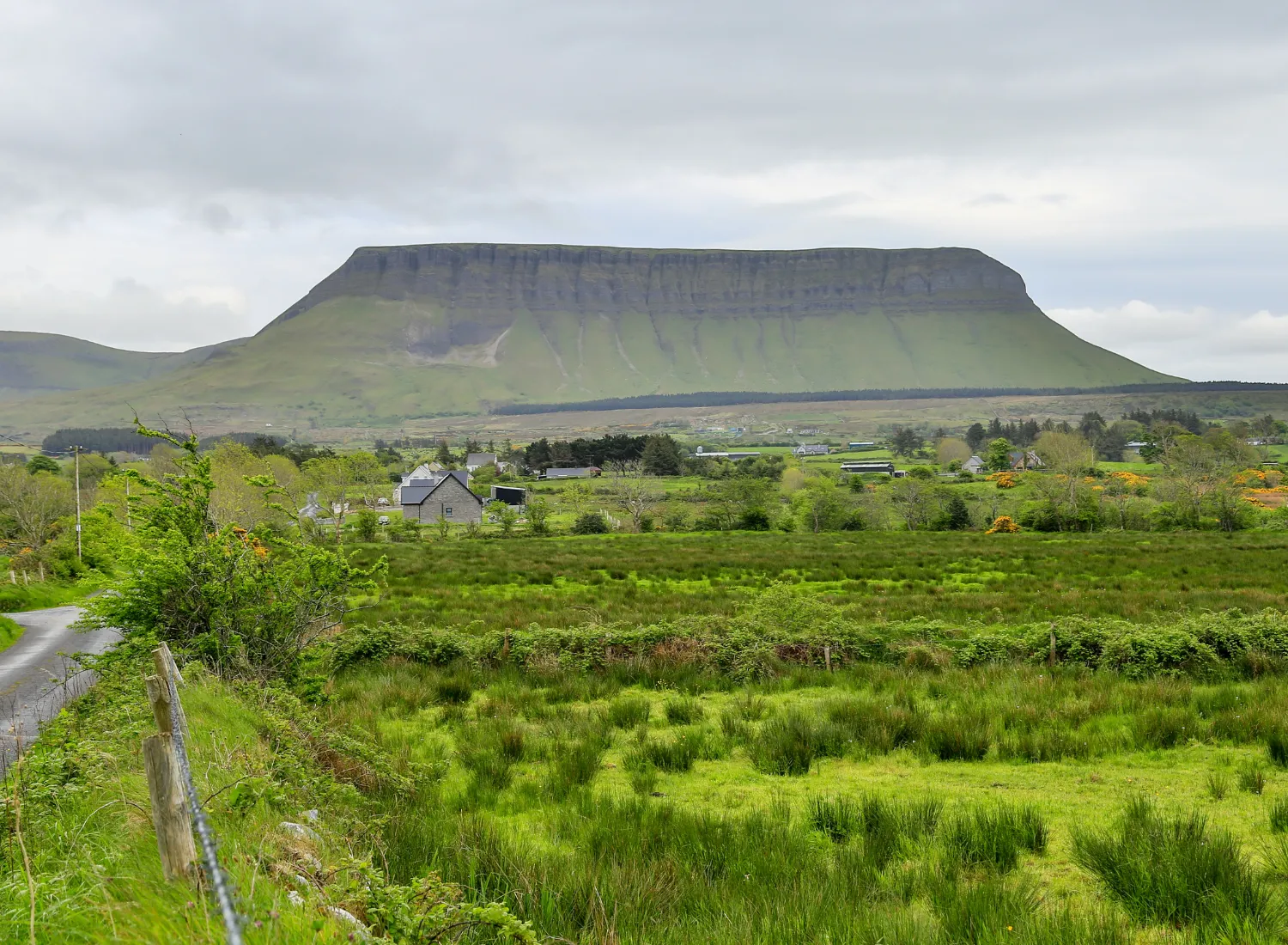
Drive into County Sligo, immediately recognisable by its iconic, flat-topped mountain.
- Scenic Stop: Drive around the base of Benbulben, often called Ireland’s ‘Table Mountain.’ It dominates the skyline and is the backdrop to much of W.B. Yeats’s poetry.
- Cultural Stop: Visit Drumcliffe Churchyard, the final resting place of W.B. Yeats.
Midday
- Cultural Stop: Tour Lissadell House, a stately home where Yeats was a frequent visitor and wrote about. It was also the childhood home of Eva Gore-Booth and Countess Markievicz, key figures in Irish history.
- Lunch Spot: Eat near the coast in Rosses Point. The Little Cottage Cafe or a local pub offers seaside views and fresh lunch options.
Afternoon/Evening
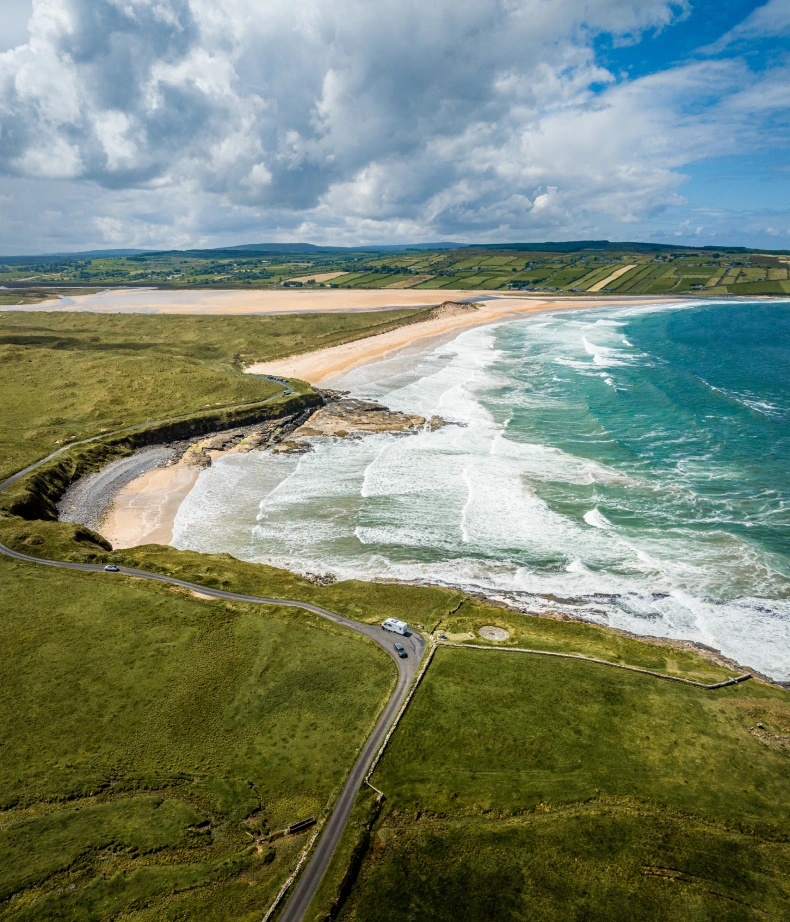
Head to the coastal village of Strandhill, a hub for surfing and holistic therapies.
- Scenic Stop: Watch the surfers tackle the Atlantic waves, or, if you’re brave, rent a wetsuit and take a lesson. Visit Carrowmore Megalithic Cemetery, one of the largest and most important concentrations of megalithic tombs in Ireland.
- Dinner Spot: Grab dinner and drinks in Sligo Town. Eala Bhan is excellent for contemporary Irish seafood. Finish the night at McLynn’s Bar, a classic Sligo pub known for its lively atmosphere and traditional music.
Day 7 (Sligo/Return Journey)
A final taste of Sligo’s inland beauty and a celebratory final meal.
Morning
Begin the day by immersing yourself in the landscape that inspired Yeats.
- Scenic Stop: Drive the scenic route around Lough Gill. Stop at Dooney Rock for elevated views over the lake and its islands.
- Cultural Stop: The most famous island in the lake is The Lake Isle of Innisfree, immortalised in Yeats’s poem. Though you can’t land on it, viewing it from the shoreline offers a sense of tranquillity.
Midday
- Cultural Stop: Visit Parkes Castle on the shores of Lough Gill – it offers an excellent insight into 17th-century life in Ireland.
- Lunch Spot: Enjoy a final authentic Irish lunch. If heading back south, stop at a traditional baker for some Boxty (a potato pancake) or grab a simple, comforting carvery lunch at a local pub.
Afternoon
Depending on your onward journey, spend the afternoon completing any final stops or beginning the drive toward your departure point (e.g., Dublin, Shannon).
- Travel Tip: Before leaving the Wild Atlantic Way, stop at a local farmers’ market or artisan shop to pick up some genuine souvenirs: locally produced cheese, smoked salmon, or a handmade tweed item!
Ready to Take the Next Step?
You don’t need to have everything figured out at once. Start with a clear understanding of the route, choose a pace that feels comfortable, and build from there.
From here, you can: