
The NE250 - Your Campervan Guide
The North East 250 (NE250) is Scotland’s emerging coastal, historic and whisky-laden driving route, offering a spectacular counterpoint to the rugged drama of the Highlands’ North Coast 500 (NC500). Circling the magnificent Cairngorms National Park, hugging the Moray Firth and Aberdeenshire coastlines, and weaving between the castles of Royal Deeside, this 250-mile loop immerses travellers in the region’s rich industrial heritage, historical attractions, serene fishing villages, and, most famously, the heartland of Scotch whisky: Speyside.
For the campervan traveller, the NE250 route offers a diverse journey – from challenging mountain passes to gentle coastal roads – requiring a balance of preparation, route awareness, and respect for local communities and the pristine natural environment. This comprehensive road trip guide provides the essential facts and practical advice needed to navigate the route responsibly and fully experience the authentic North East of Scotland. The ultimate road trip awaits!
If you’re still deciding whether this route is right for you, start with our NE250 overview first.
If you’re ready to plan, you’re in the right place!
Planning Your NE250 Campervan Trip
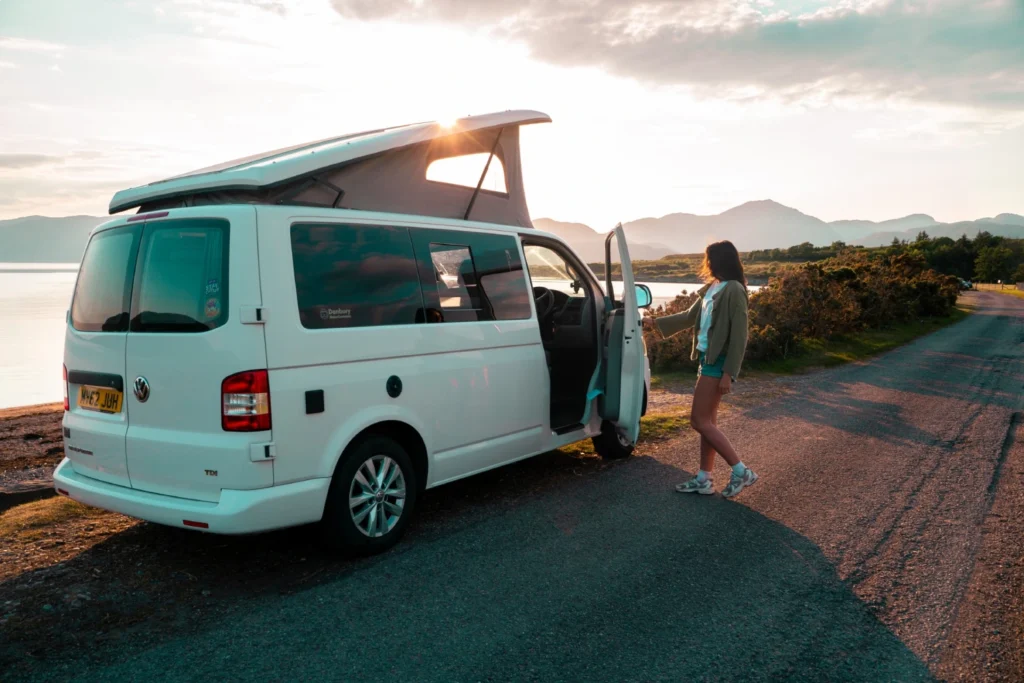
The NE250 officially begins and ends in Aberdeen. However, you can join the circular route at any point (we prefer the village of Braemar, a perfect introduction to the Cairngorm mountains and Royal Deeside). The standard advice is to drive clockwise, starting west into the hills so that you can finish with the stunning coastal scenery and castle country.
Vehicle Size
Unlike the often tight, single-track roads of the West Coast, the NE250 features generally wider A-roads and B-roads. A larger motorhome is more manageable here than on routes like the NC500 or Skye. However, remember that access to specific car parks (especially at distilleries or small harbours) may still be restricted by height and length barriers. A mid-sized campervan remains the most versatile option!
Which Season Suits You?
The route is accessible year-round, but conditions vary dramatically:
Season | What to Expect | Campervan Considerations |
|---|---|---|
Peak Season (Jun-Aug) | The warmest weather, with long daylight hours, peak tourism, and whisky festivals. | Book campsites well in advance, especially near popular coastal towns like Cullen and Banff. |
The Shoulder Seasons (Apr-May, Sep-Oct) | Balanced temperatures that are ideal for hiking with beautiful seasonal colours and quieter roads. | Perfect for a relaxed pace; mountain passes may occasionally experience early or late snow. |
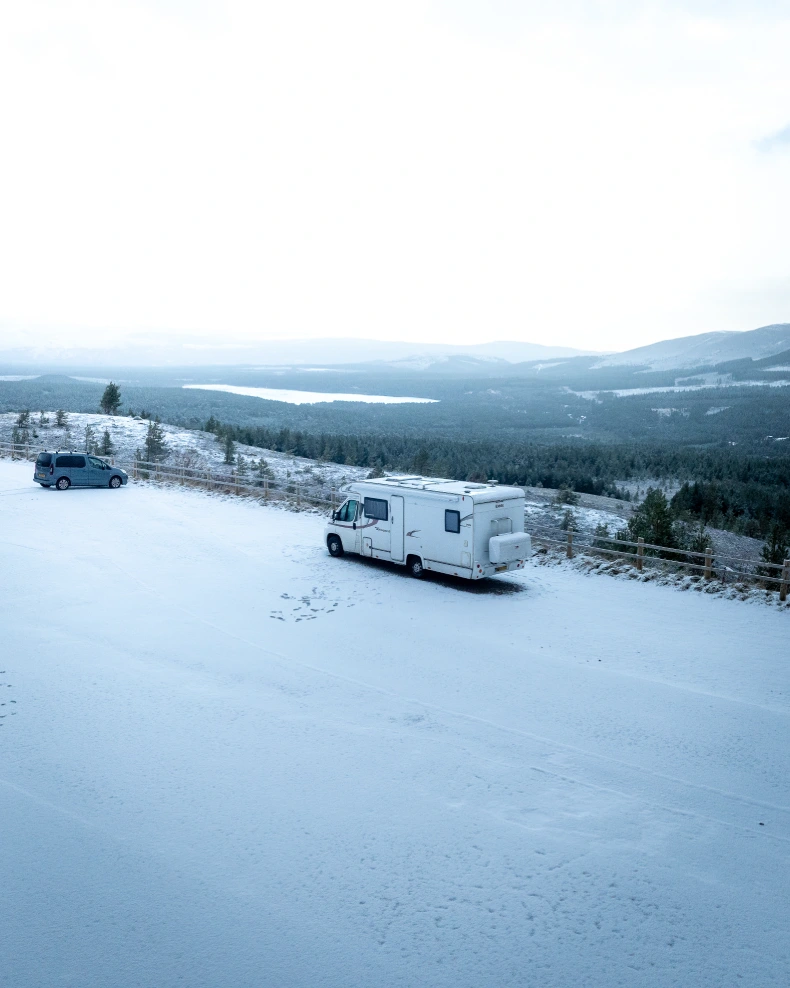
Off Season (Nov-Mar) | Tranquil, dramatic scenery but some high-altitude roads may be closed due to snow (A93 and parts of the Cairngorms). | Essential to check road conditions daily (via Traffic Scotland); requires good winter tyres and driving skills. |
Essential Kit and Supplies
- Fuel: Fuel stations are reliable in larger towns and hubs (e.g., Braemar, Ballater, Grantown-on-Spey, Elgin), but distances between services can be significant, particularly in the Cairngorms section. Always refill when the tank drops below half!
- Water and Waste: Plan water refills at campsites. Designated points for chemical toilet disposal are typically found only at official campsites. Never dispose of grey or black waste in public drains, verges, or rivers.
- Midge Repellent: Although generally less severe than the West Highlands, the Moray Firth coastline can be subject to midges, particularly around standing water at dawn and dusk. Smidge or high-DEET repellents are recommended!
The NE250: Route Awareness
The NE250 can be broadly divided into four distinct areas, each with unique driving characteristics: The Cairngorms, Speyside, the Coastal Routes and Royal Deeside.
The Cairngorms (The Mountain Passes)
This section, typically the first leg when driving clockwise, is the most geographically challenging but offers some of the most spectacular views.
- Key Roads: The A93 (passing Glenshee and the Glenshee Ski Centre) and the A939 (the ‘Old Military Road’ over the Lecht Ski Centre) are high-altitude roads.
- Driving Advice: Be prepared for steep ascents and descents, sudden weather changes (even in summer), and potential snow closures in winter. These roads are generally well-maintained A-roads but require caution. Slow down for the tight hairpin bends near the ski centres!
- Wildlife: The Cairngorms are home to deer, red squirrels, and a variety of birds. Drive slowly, especially at dawn and dusk, and be prepared to stop for wildlife crossing the road.
Speyside (Whisky Country)
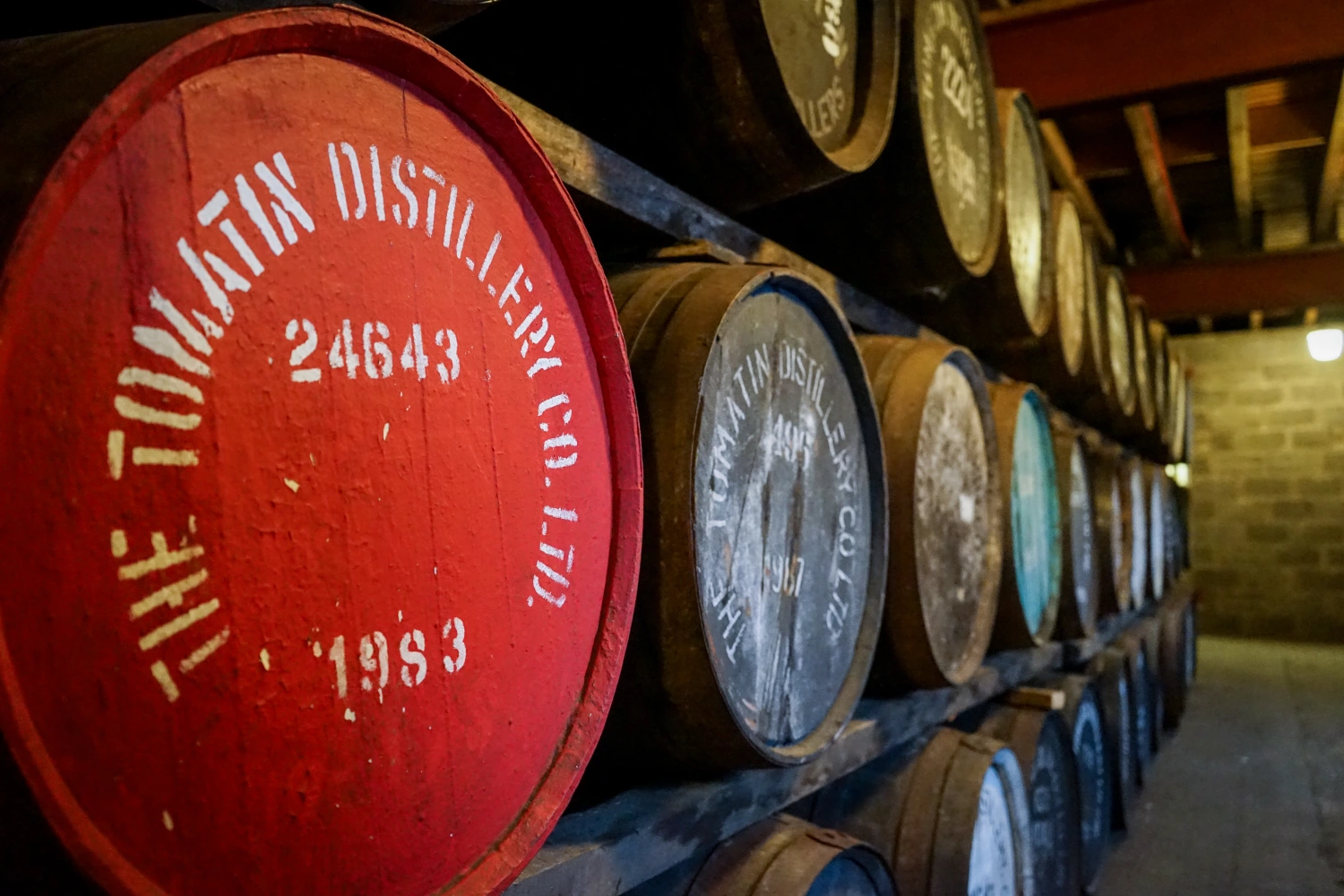
This area is defined by the River Spey and the numerous whisky distilleries lining its banks.
- Key Roads: Mostly B-roads and quiet, winding country lanes connecting villages like Dufftown, Aberlour, and Craigellachie.
- Driving Advice: Traffic here consists mainly of distillery delivery vehicles (lorries) and farm traffic. Distilleries often have limited parking. If you plan a tasting tour, ensure the driver remains strictly sober – Scotland has stringent drink-driving laws. Pre-booking tours is essential, and takeaway drinks are offered to designated drivers.
The Moray Firth and Aberdeenshire Coastlines
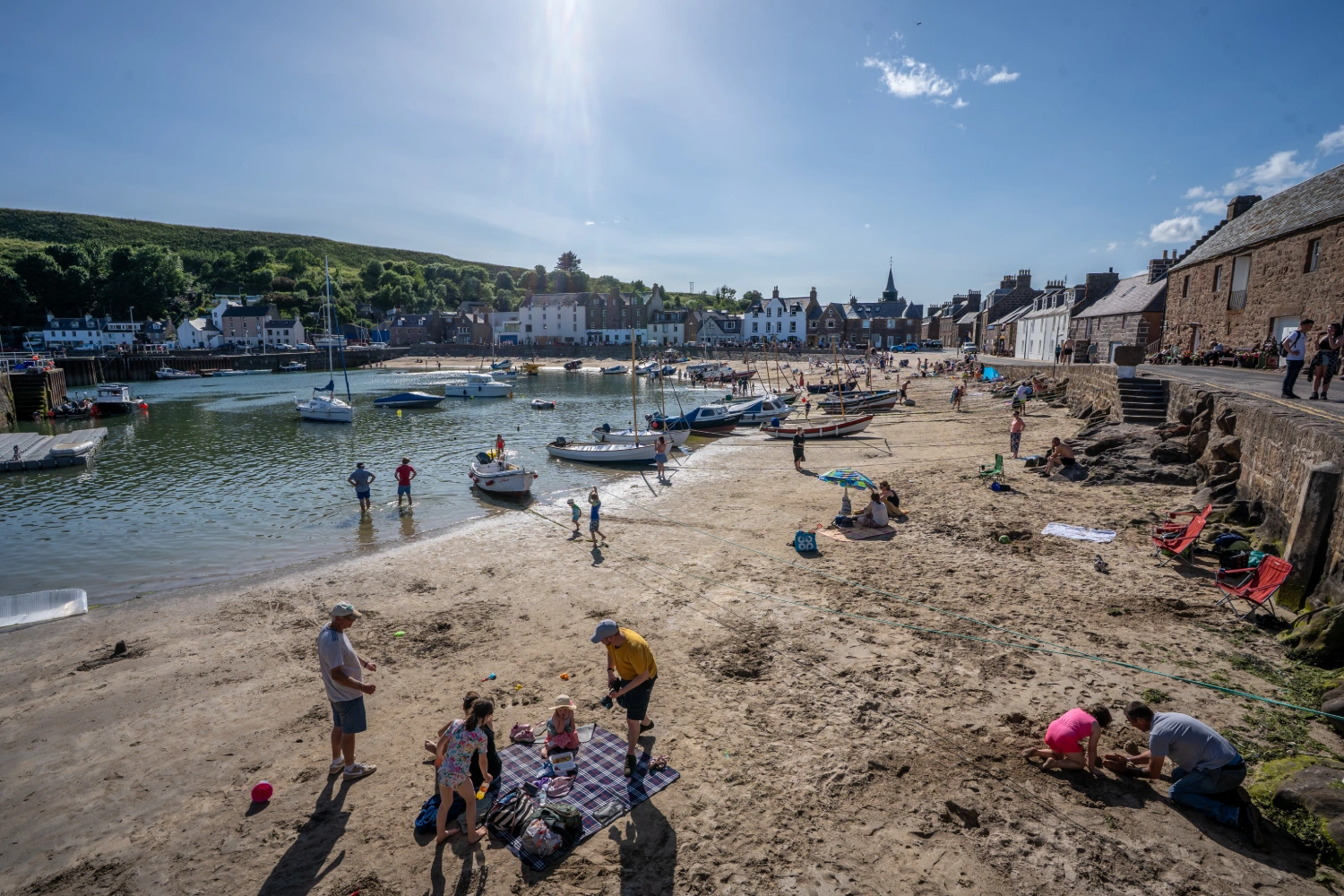
From Cullen to Peterhead and down to Aberdeen, this is a spectacular drive through charming fishing towns and dramatic cliff scenery.
- Key Roads: The A98 and various coastal B-roads.
- Driving Advice: Be mindful of narrower village streets and harbour areas – fishermen and port activities take precedence. The road near the rugged cliffs can be winding, and take your time to enjoy the views at designated pull-ins, rather than stopping on the road.
Royal Deeside (Castle Culture)
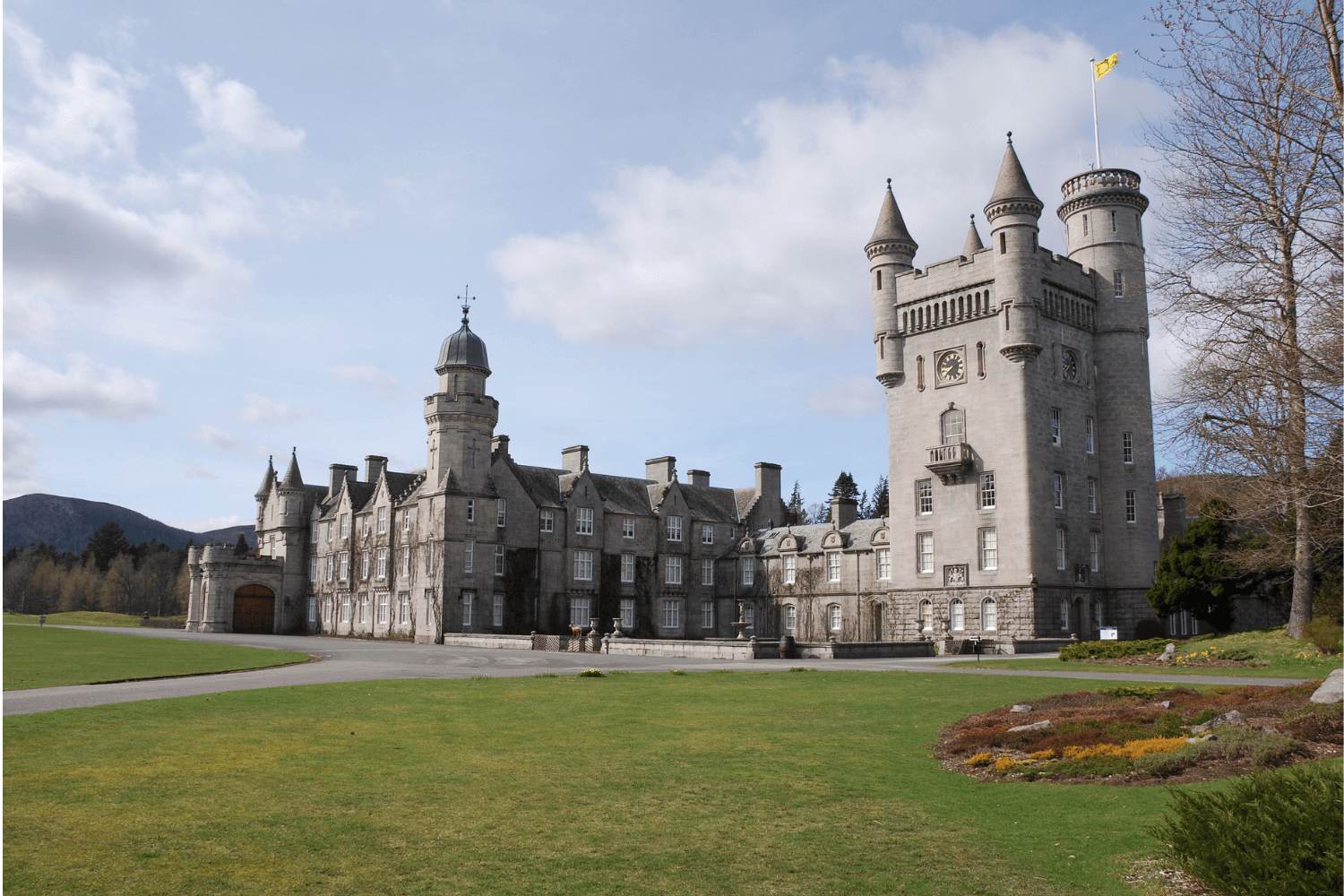
This area follows the River Dee from Aberdeen to the Cairngorms National Park, featuring Balmoral Castle and dramatic high-altitude scenery.
- Key Roads: The A93 is the backbone, running through Banchory, Aboyne, Ballater, and Braemar. Smaller, scenic roads branch off, particularly into the mountains.
- Driving Advice: Be alert for red deer and sheep, especially near dusk and dawn. Snow and ice can make driving treacherous in winter, requiring caution and potentially 4×4 capability on minor roads. Traffic levels are low outside of the peak summer months, and access to some sites, such as Balmoral, may be restricted during royal residency.
The Campervan Guide: Legal Considerations
Just like other popular Scottish routes, the NE250 experiences pressure from irresponsible overnight parking. While the Scottish Outdoor Access Code permits wild camping (in tents), it explicitly does not apply to motor vehicles.
Staying Legally and Responsibly
- Designated Sites: The only guaranteed way to stay overnight legally is to use designated facilities. Bookings are essential, especially during high season:
- Official Campsites: Provide full facilities (water, waste disposal, electric hook-up).
- Certified Locations (CLs) and Farm Stops: Often quieter, these are small, private sites for a limited number of vehicles and are sometimes bookable via apps such as BritStops or local listings.
- Designated Overnight Parking: Some villages or community trusts offer paid overnight parking for motorhomes (usually without full facilities).
- “No Overnight Parking” Signs: The majority of laybys, viewpoint car parks, and beauty spots on the NE250 now have clear signs prohibiting overnight stays. You must respect these signs. Ignoring them damages the route’s reputation and leads to local resentment!
The NE250: Local Customs
The North East is known for its distinct Doric dialect and strong sense of community, particularly in the coastal towns and remote Cairngorms villages.
Supporting the Local Economy
The economy here is built on fishing, farming, and whisky.
- Buy Local: Seek out local butchers, bakeries, and farmers’ markets for your supplies. Taste the famed Aberdeen Angus beef or fresh seafood from the Moray Firth!
- Pubs and Restaurants: Support local pubs and cafés – in smaller villages, these establishments are the heart of the community. Booking dinner ahead is a courtesy and often necessary.
- Whisky: Engage with the distilleries respectfully. They are working businesses and significant local employers.
Fences, Gates, and Livestock
The Cairngorms and surrounding farmlands are working environments for sheep and cattle farming.
- Gates: If you encounter a closed farm gate, and you open it to pass through (e.g., to access a public right-of-way), always close it behind you, even if no livestock are immediately visible. This prevents animals from escaping or straying onto roads.
- Livestock: Drive cautiously around livestock, giving animals a wide berth. Never feed or approach farmed animals.
Leave No Trace
The guiding principle of responsible travel is to Leave No Trace of your visit.
- Litter: Take all your rubbish with you, especially human waste and toilet paper from non-campsite stops. Carry waste until you reach a significant town centre disposal point or the mainland.
- Fires: Never light fires or BBQs on the ground, especially during dry periods. Use designated areas only!
Want Help Planning Your Trip?
If you’d like a second opinion or help tailoring the route to your exact needs, we offer personalised trip planning calls.
These are ideal if:
It’s your first time on the route
You’re short on time
You’re travelling by campervan
You want reassurance before booking
You’ll speak directly with people who’ve driven the NE250 themselves and understand what works in practice – not just in theory!
👉 Book a planning call
Ready to Take the Next Step?
You don’t need to have everything figured out at once. Start with a clear understanding of the route, choose a pace that feels comfortable, and build from there.
From here, you can: