
The NC500 - Your Campervan Guide
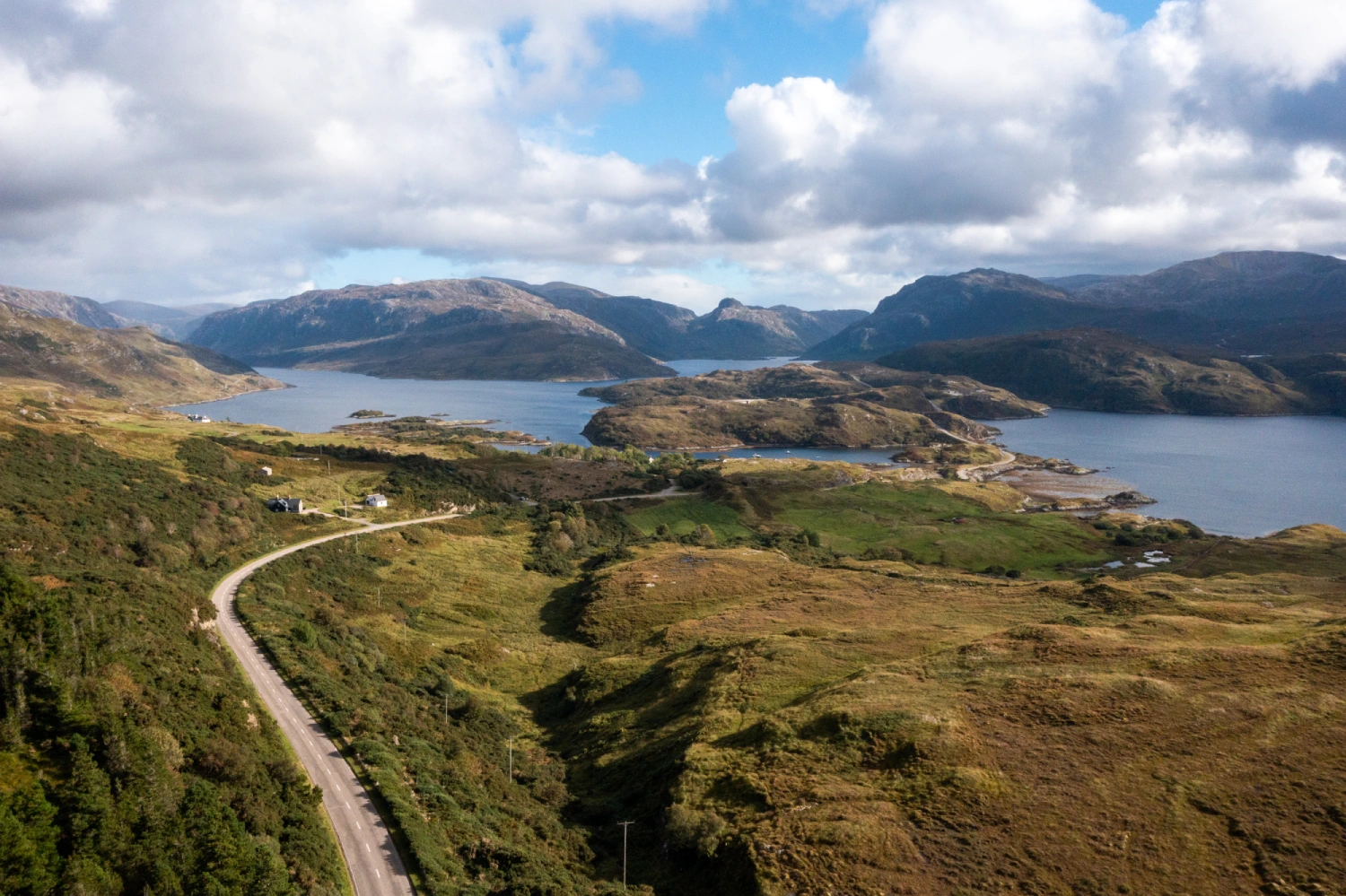
The North Coast 500 (NC500) is Scotland’s world-renowned road trip, forming a 516-mile loop that begins and ends in Inverness and follows the stunning coast of the northern Highlands. The scenery is truly spectacular, showcasing ancient castles, beautiful beaches, and dramatic mountain passes.
However, travelling in a campervan or motorhome requires proper planning, environmental respect, and an understanding of local conditions. This guide offers practical, accurate, and genuine advice to help you enjoy a successful NC500 campervan journey!
If you’re still deciding whether this route is right for you, start with our NC500 overview first.
If you’re ready to plan, you’re in the right place.
Planning Your NC500 Campervan Trip
Vehicle Size
Driving a large, RV-sized motorhome (7m+) on certain sections is strongly discouraged or explicitly forbidden by hire companies and local signage.
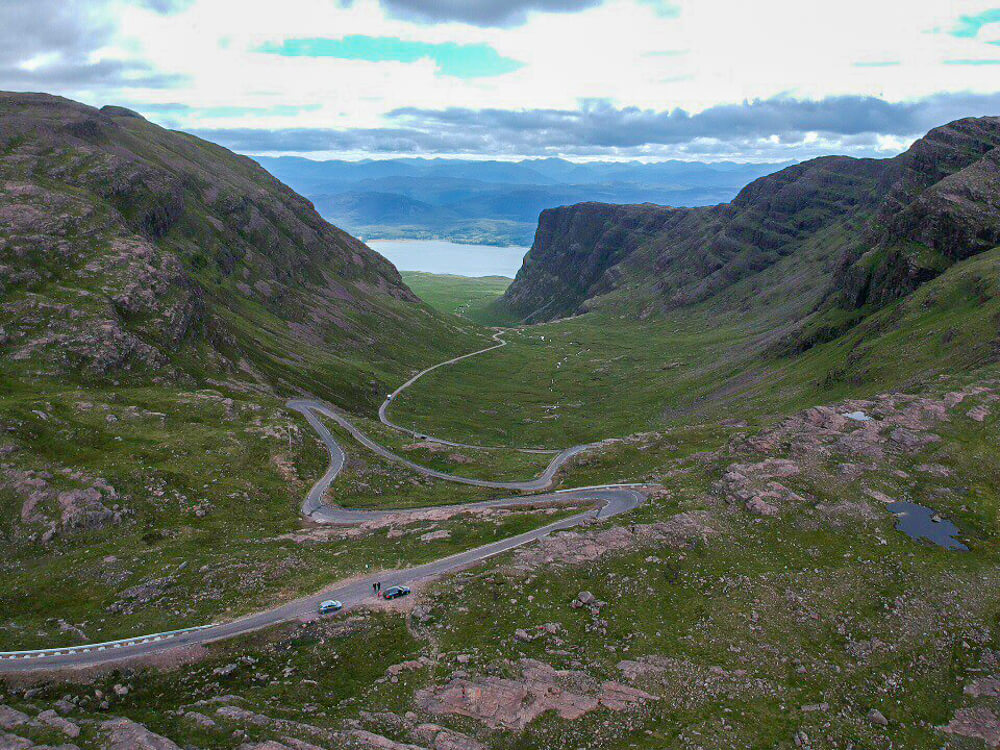
The remote and winding route known as the Bealach na Bà (Applecross Pass) features steep gradients (up to 20%), hairpin bends, and sheer drops. If your vehicle is larger than a standard LWB transit van (e.g., 6m and/or 3.5 tonnes), you must take the alternative coastal route (A896/B9157) around the peninsula. Ignoring this puts you and other drivers at serious risk!
Water, Waste, and Electric
- Water: Filling up can be challenging. Most larger campsites offer freshwater filling stations. Public facilities for motorhomes are rare.
- Grey Water (Sinks/Showers): Do not dump grey water on the road or in passing places. Use designated waste points at campsites.
- Black Water (Toilet): Absolutely must be disposed of at a designated Chemical Disposal Point (CDP), also known as an “Elsan Point.” Dumping waste anywhere else is illegal, polluting, and unacceptable. Not all small or independent sites have a CDP, so check in advance!
Fuel Stops
While not as sparse as they once were, fuel stations can still be few and far between, especially between Ullapool and Durness. Always top up the tank when you see a station, even if it’s only half full!
Fuel prices in remote areas are often significantly higher than in Inverness.
In Need of a Highland Steed?
Midges: The Tiny Terror
Scottish midges (Culicoides impunctatus) are small, biting insects that thrive in still, damp conditions, especially at dawn and dusk from May to September. They can ruin an evening outdoors!
- Use Smidge: Widely regarded as the most effective repellent.
- Midge Nets: Essential if you plan to spend time outdoors near lochs or wooded areas.
- Wind: Midges hate wind. If there’s a breeze (over 5-7 mph), they are usually absent!
The Single-Use Plastic Problem
The NC500 route is striving to be sustainable. Pack reusable water bottles, coffee cups, and shopping bags. Many remote locations have limited public waste bins, so you must be prepared to take all your waste with you until you find an appropriate disposal point (e.g., at a campsite or central town).
Connectivity
Mobile phone signal is highly unreliable outside the major towns (Inverness, Ullapool, Thurso). Do not rely on mobile data for navigation.
- Offline Maps: Plan and download routes and apps like Google Maps or dedicated GPS apps (like OS Maps) before you leave Inverness.
- Stay in Contact: Inform family or friends of your itinerary as a safety precaution, especially if planning remote hikes.
The NC500: Route Awareness
Optimal Duration
While you can complete the route in three days, it’s highly discouraged, especially with a larger vehicle. A practical minimum is 5 to 7 days to include key stops and short hikes, but for a more enriching experience, 10 to 14 days is ideal, giving you time to relax, secure campsites, and explore various detours!
Browse our complete NC500 itinerary overview here
Booking Accommodation
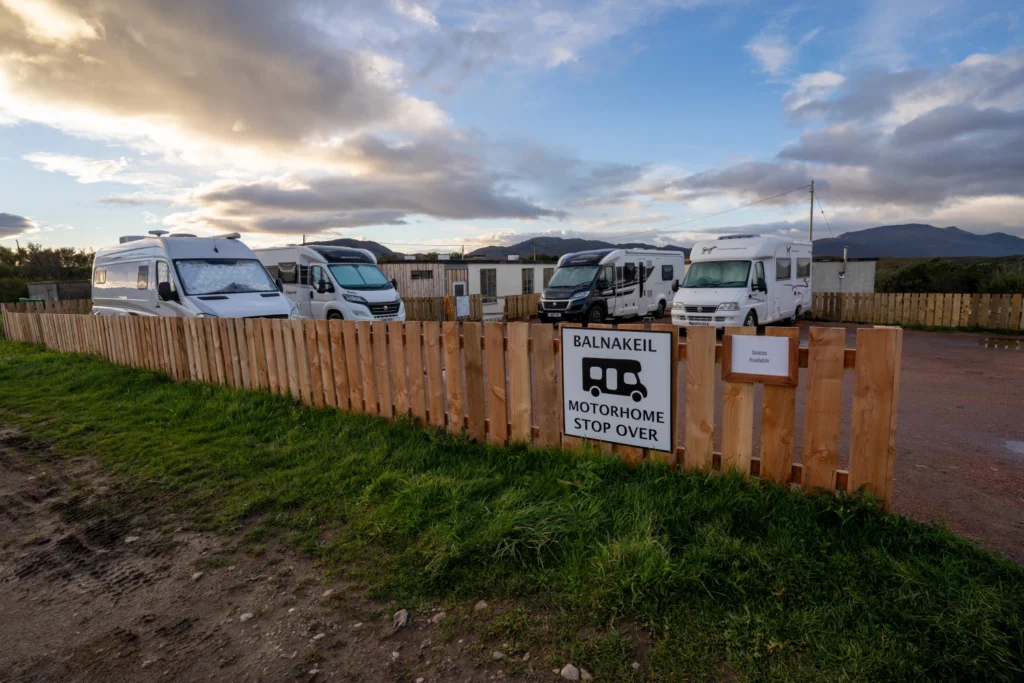
The NC500’s popularity has put pressure on local infrastructure, especially during peak months (May to September). Although wild camping is legal in Scotland under the Land Reform (Scotland) Act 2003, this does not extend to motorised vehicles! You must reserve campsites or designated motorhome stopovers.
Season | Booking Lead Time Recommendation | Notes |
|---|---|---|
Peak (Jul-Aug) | 6-12 months | Essential, especially for popular sites. |
Shoulder (May, Jun, Sep) | 3-6 months | Highly recommended to secure preferred locations. |
Off-Peak (Oct-Apr) | 1 week – 1 month | Easier, but many smaller sites may be closed. |
Do not rely on finding a spot at the last minute. Arriving at popular beauty spots in a motorhome and attempting to ‘wild park’ overnight is often illegal (due to local bylaws), causes congestion, and has led to negative local sentiment. Use sites such as Pitchup or the NC500 official website to book in advance.
Route Highlights
Location | Key Attraction | Practical Fact |
|---|---|---|
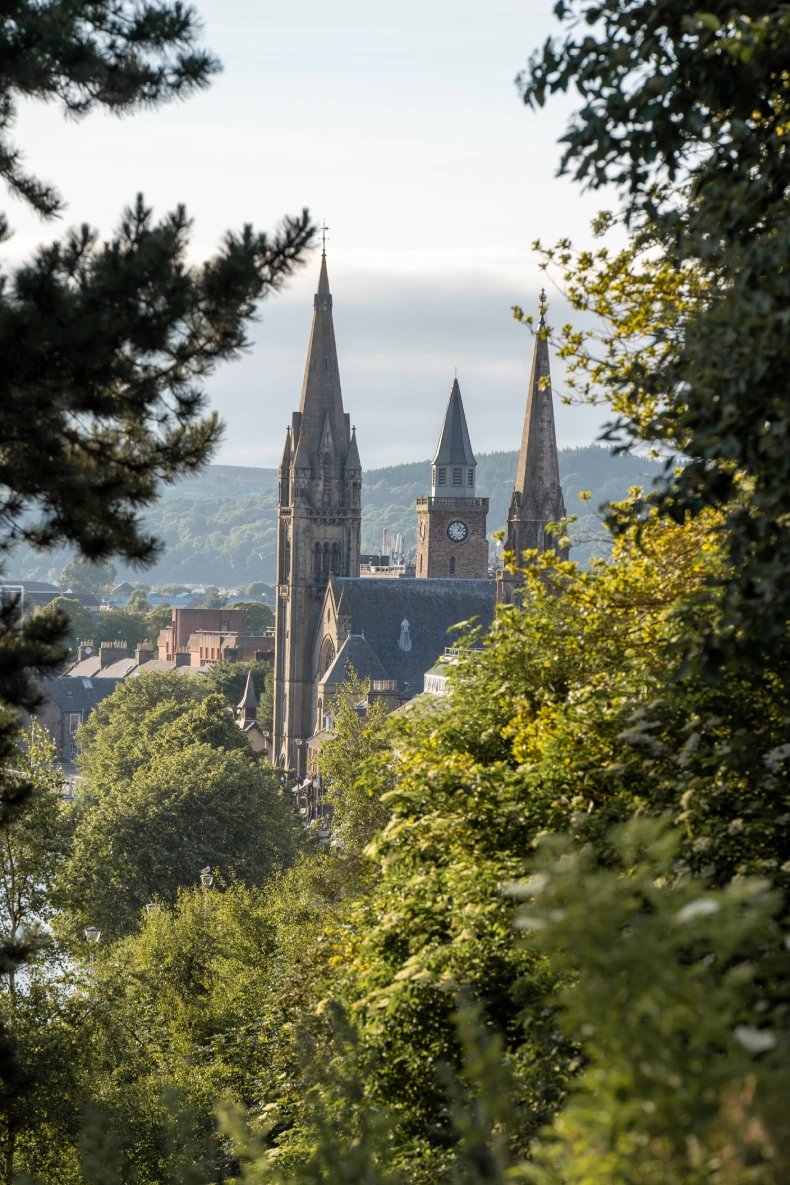
Inverness | Starting/Ending Point | Last chance for a major supermarket restock and affordable fuel. |
Applecross | Bealach na Bà Pass | Avoid this route in large vehicles. Use the coastal road! |
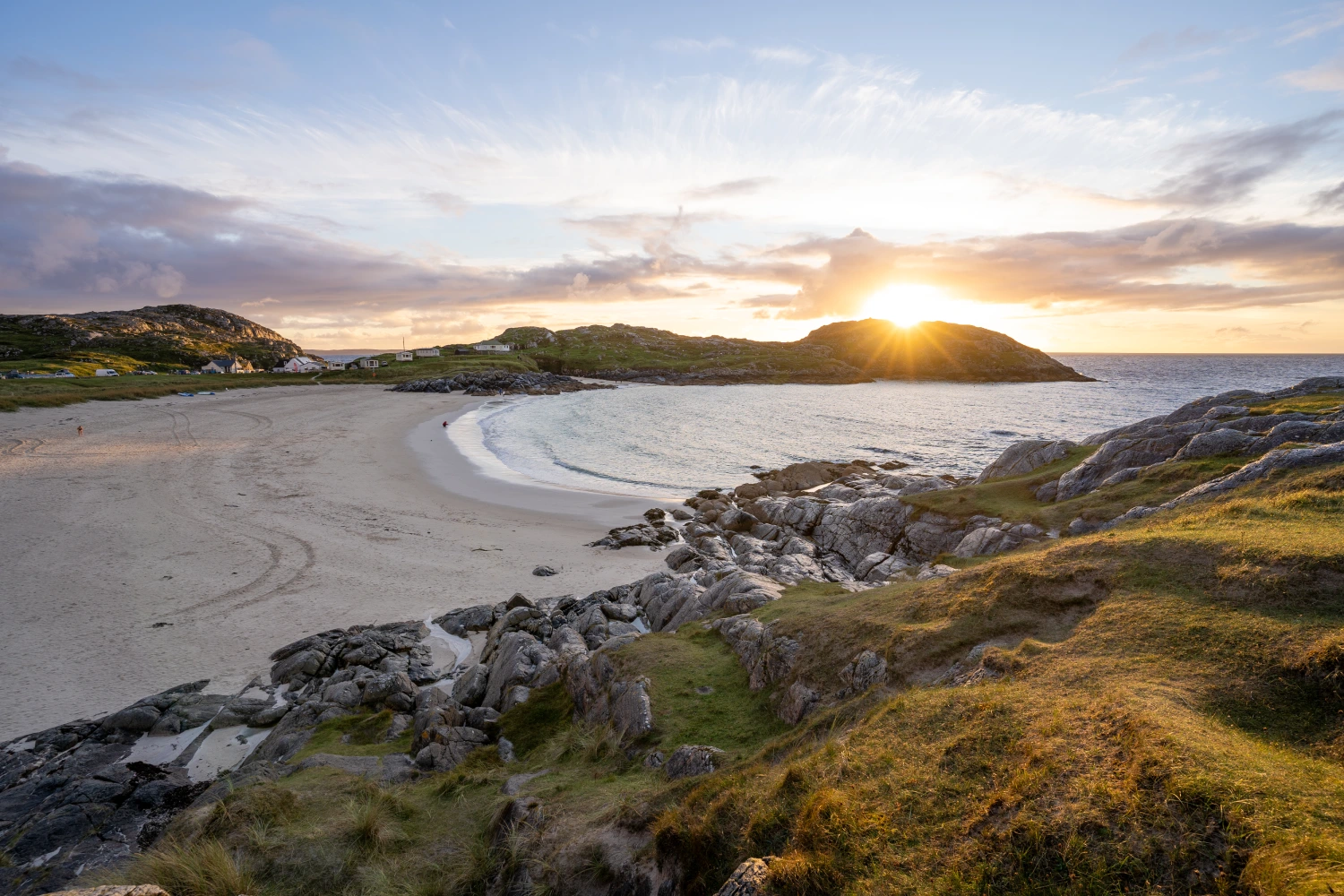
Gairloch | Beautiful Beach/Loch | Great stop for sea kayaking or whale watching tours. |
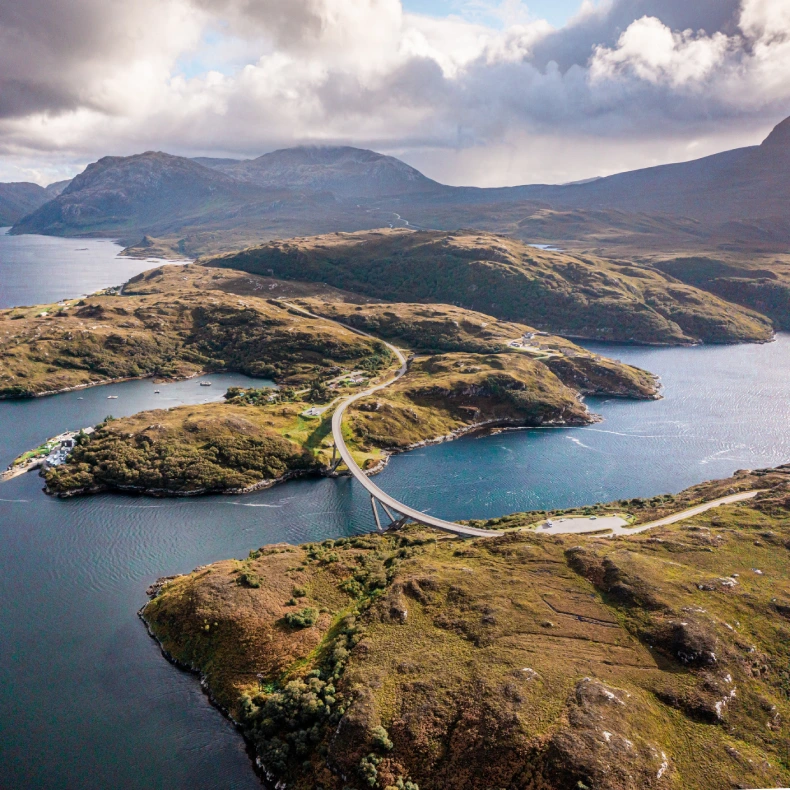
Kylesku Bridge | Architectural Landmark | Modern stop; the nearby Kylesku Hotel is famed for its seafood. |
Durness | Smoo Cave | Park at the designated car park. The cave access also involves steep steps. |
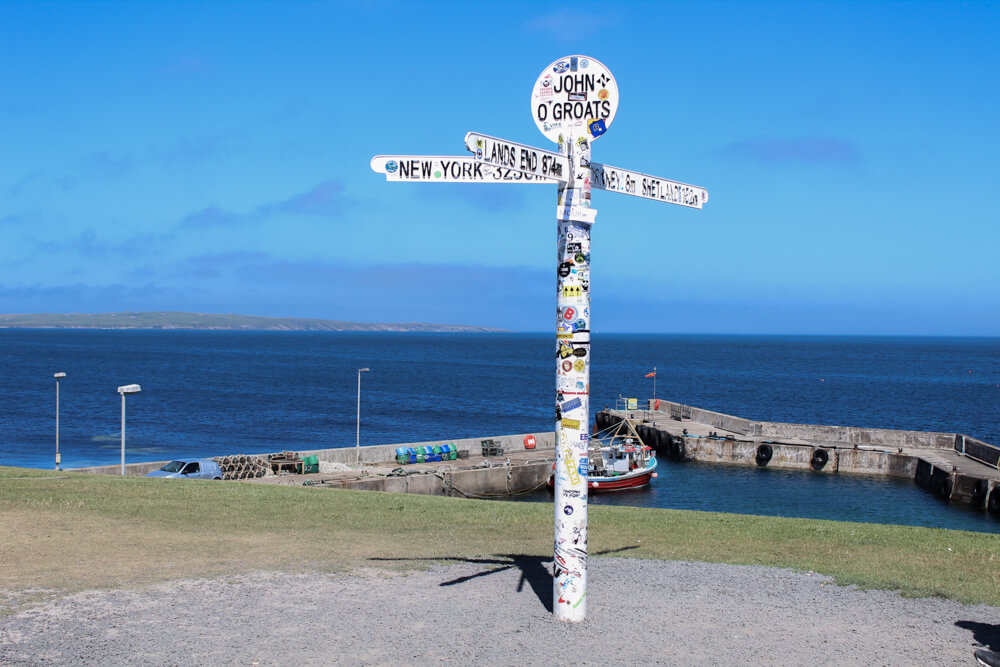
John o’ Groats | North-Eastern Point | The famous signpost is a photo opportunity, but Dunnet Head is the actual most northerly point of mainland Britain. |

The Campervan Guide: Legal Considerations
The NC500 is not a race track. Much of the route consists of narrow, single-track roads, particularly in the Wester Ross and Sutherland sections (e.g., Applecross Peninsula, B869 Drumbeg Loop).
Key Rules for Single-Track Roads
- Use Passing Places: These are marked by black-and-white poles. Always pull into a passing place on your left when meeting oncoming traffic. If the passing place is on your right, wait opposite it until the oncoming vehicle passes.
- Facilitate Overtaking: If you have a queue of cars building up behind you, use a passing place to pull over and allow faster traffic to pass. It is courteous and safe!
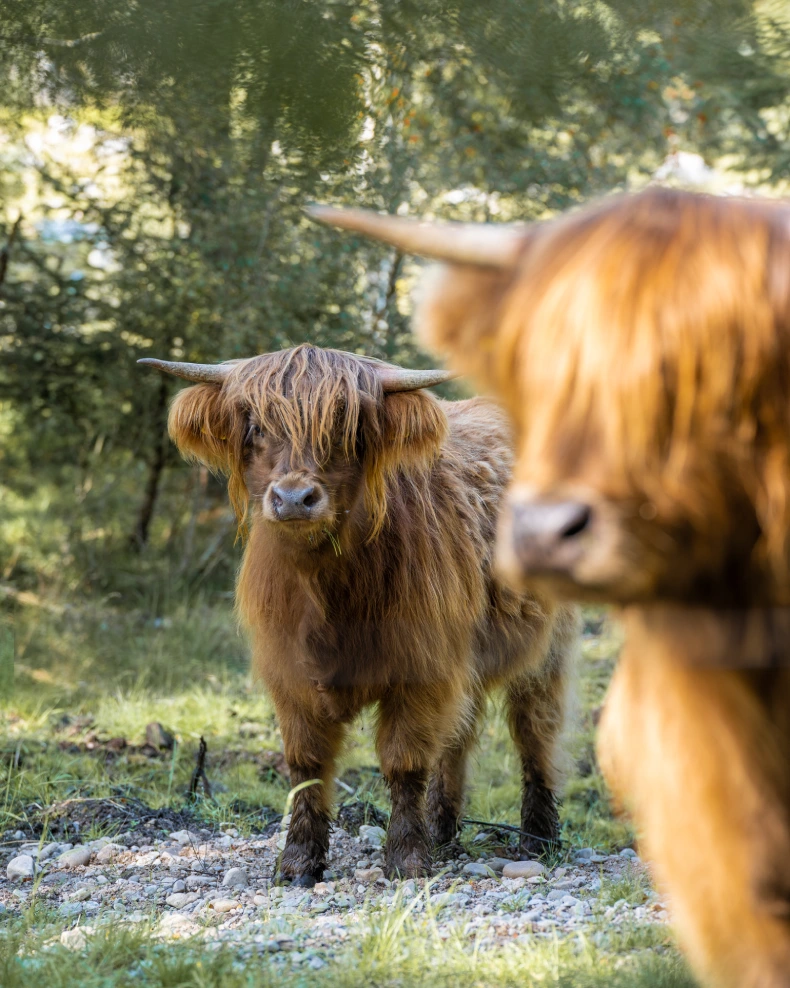
- Speed Limits: While the national speed limit (60 mph for cars, 50 mph for campervans over 3.5t) technically applies, rarely will you exceed 30-40 mph safely. Slow down for bends and be alert for livestock (sheep and Highland cows often graze freely) and deer.
The NC500: Local Customs
The NC500 is not a theme park or adventurer’s playground, but a myriad of delicate ecosystems and working communities.
- Support Local Businesses: Spend your money in local shops, cafes, and pubs, not just major chains!
- Leave No Trace: Follow the Scottish Outdoor Access Code. This is critical for all road users, but especially for motorhome users who carry their accommodation with them. If you see litter, pick it up!
- Emergency Services: Dial 999 or 112 for Police, Fire, Ambulance, or HM Coastguard. Know your location markers (road numbers, mileposts) as they can be vital in remote spots!
Driving the NC500 in a campervan offers unparalleled freedom and immersion in Scotland’s greatest circuit. By respecting the land, planning your overnight stays meticulously, and driving conservatively on the single-track roads, you ensure a safe, enjoyable, and sustainable adventure for yourself and the communities you pass through.
Want Help Planning Your NC500 Trip?
If you’d like a second opinion or help tailoring the route to your exact needs, we offer personalised trip planning calls.
These are ideal if:
It’s your first time on the route
You’re short on time
You’re travelling by campervan
You want reassurance before booking
You’ll speak directly with people who’ve driven the NC500 themselves and understand what works in practice – not just in theory!
Ready to Take the Next Step?
You don’t need to have everything figured out at once. Start with a clear understanding of the route, choose a pace that feels comfortable, and build from there.
From here, you can: