
The Isle of Skye - Your Campervan Guide
The Isle of Skye is arguably Scotland’s premier road trip destination, laden with dramatic landscapes, serene beaches and looming mountains. For many, the only way to truly experience its raw beauty is from the mobile comfort of a campervan; from here, you can roam freely amongst ruins and rugged cliffs, or pull up beside a sun-glazed loch or vibrant village for the night, and truly settle into the storied spirit of Skye.
However, Skye’s popularity demands respect for its fragile environment and the communities that call it home. This guide provides practical advice, route awareness, and insight into local customs to ensure your Skye itinerary campervan adventure is both unforgettable and responsible.
If you’re still deciding whether this route is right for you, start with our Skye overview first.
If you’re ready to plan, you’re in the right place!
Planning Your Skye Campervan Adventure
Vehicle Size
Skye’s roads, particularly the minor ones, can be narrow and winding.
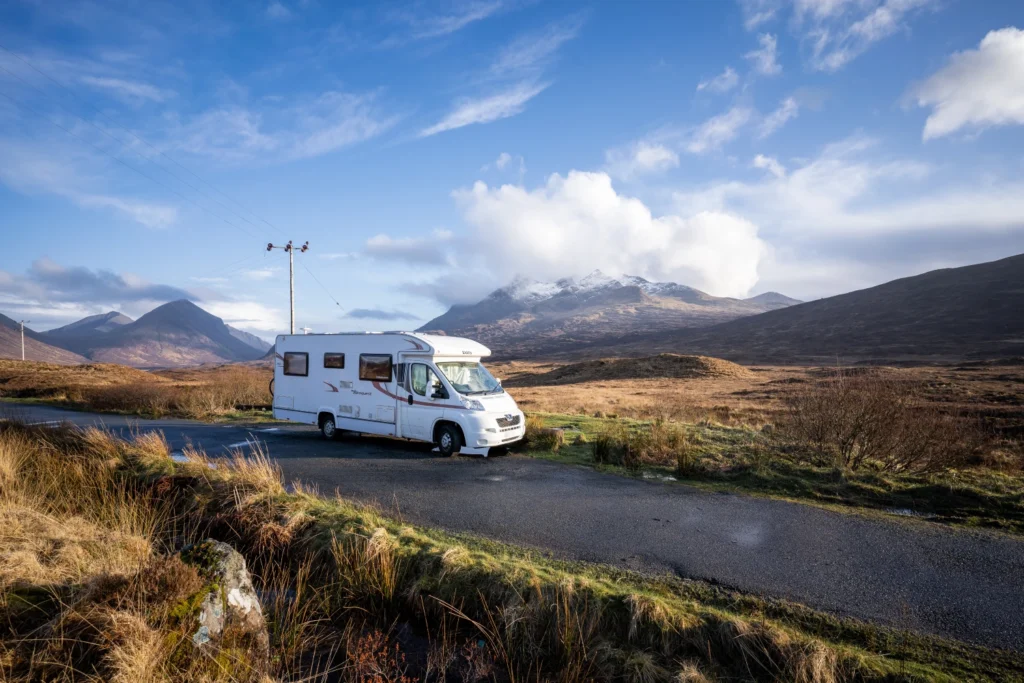
While a large motorhome offers luxury, a smaller, more nimble campervan (e.g., a VW California or similar) is highly recommended. You’ll navigate single-track roads, passing places, and tighter parking spots with far greater ease.
Make sure your van has good heating (even in summer), adequate fresh water storage, and a reliable leisure battery setup for off-grid nights.
The Isle of Skye: When to Go
The season dramatically affects your experience:
Season | Typical Experience | Campervan Consideration |
|---|---|---|
Peak Season (Jun-Aug) | Expect the warmest weather, long daylight hours (Midge season!) and peak crowds. | Book campsites months in advance; parking is competitive. |
Shoulder Seasons (Apr-May, Sep-Oct) | Beautiful colours, fewer midges and good light for photography. | Ideal time for a relaxed trip; many facilities are still open and there are less crowds. |
Off Season (Nov-Mar) | Dramatic light and snow-capped mountains, very quiet roads but some facilities are closed. | Requires good winter driving skills; fewer overnight options; very cold. |
Fuel and Supplies
- Fuel: Portree is the primary fueling station, with additional stations in Broadford and Dunvegan. Prices on the island are higher than on the mainland – fill up before crossing the Skye Bridge!
- Water and Waste: Plan your water refills (campsites or public facilities). Under no circumstances should you empty grey water or chemical toilets (black waste) into drains, verges, or public toilets. Use designated disposal points at campsites (often called Elsan points).
The Midges
These tiny biting insects are a feature of the Scottish summer, especially at dawn and dusk, or when the air is still and damp, like remote forests and water.
- Defence: Head nets, wearing long sleeves, and using high-DEET repellents are essential. The most effective local remedy is Smidge or Avon Skin So Soft (Dry Oil Spray).
- Campervan Strategy: Keep windows and roof vents closed during peak midge times unless protected by midge netting!
The Isle of Skye: Route Awareness
Skye is dominated by a single main road, the A87, but the magic lies on the smaller peninsulas.
Key Route Highlights (The Standard Loop)
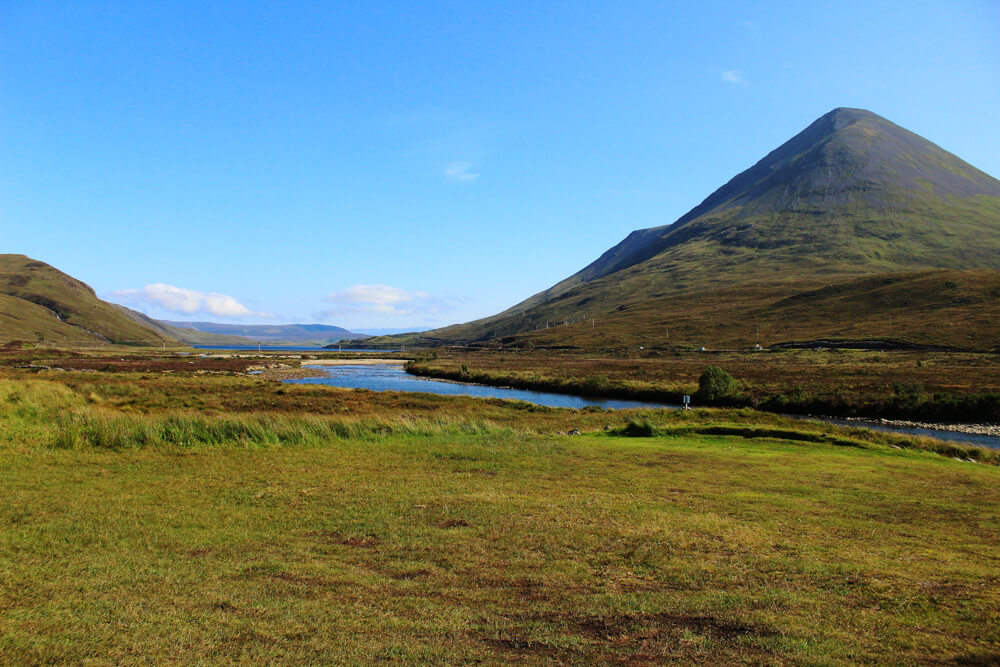
- The Cuillins and Sligachan: Entering the island, the peaks of the Cuillin range dominate the horizon; stop at Sligachan Old Bridge for iconic views and take a moment to soak it all in!
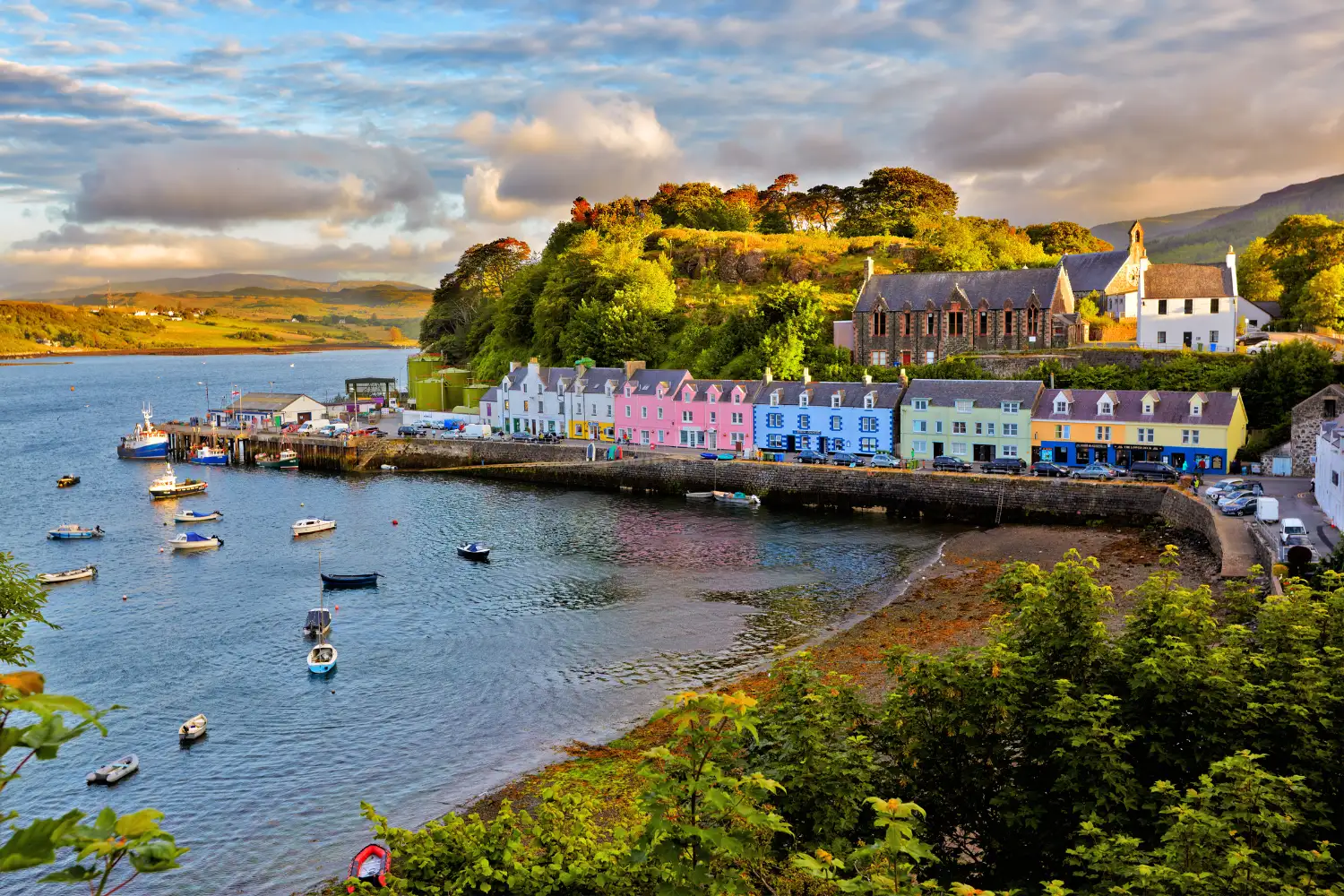
- Portree: The capital and central hub, a perfect place to stock up on supplies, fuel, and use the official long-stay car parks. Its brightly coloured harbour is a must-see!
- The Trotternish Loop (A855): This 50-mile circuit is home to the island’s most famous landmarks:
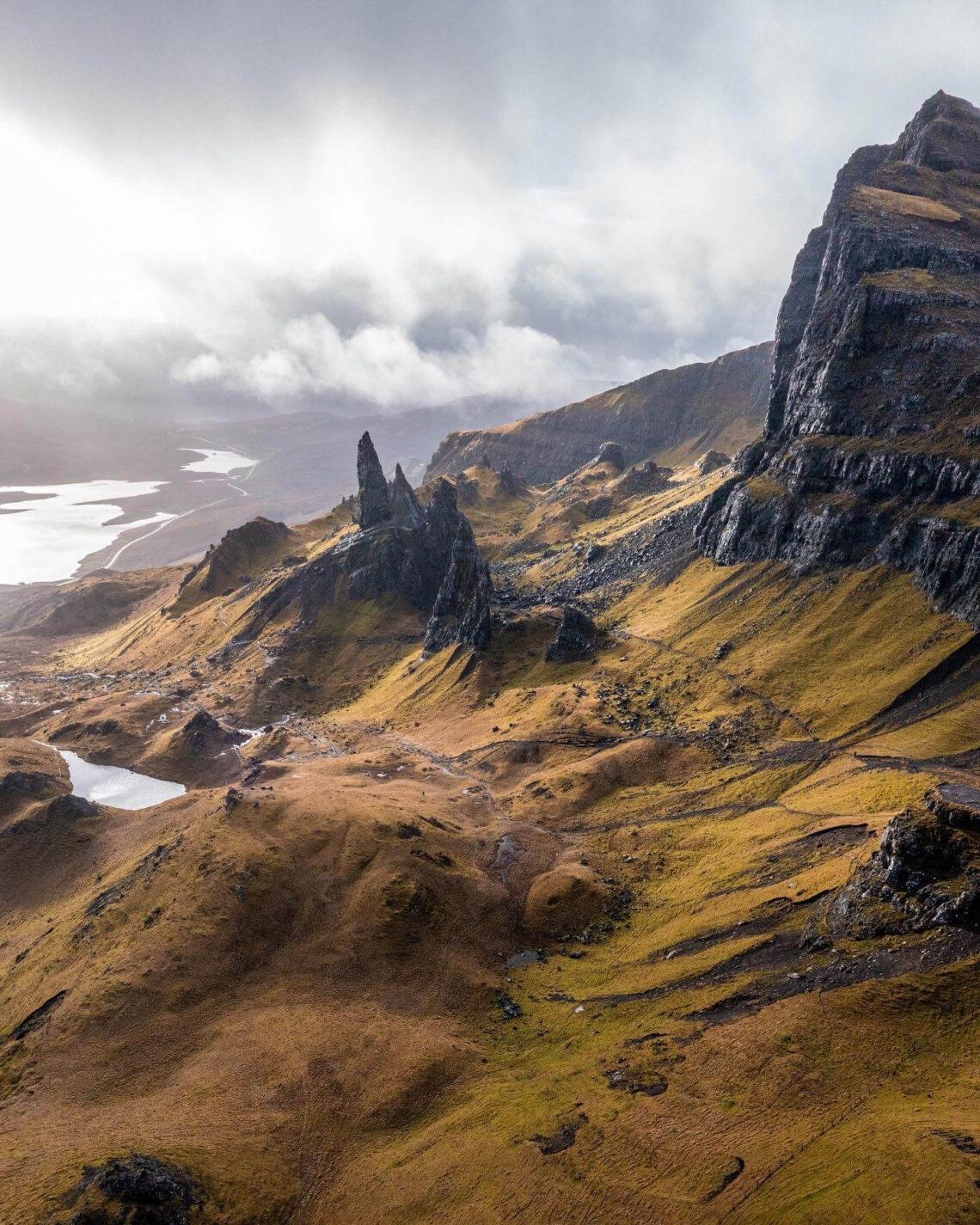
- The Old Man of Storr: Requires an early start to beat the crowds. Parking here is now paid and strictly controlled!
- Kilt Rock and Mealt Falls: A dramatic viewpoint offering sea views and a waterfall cascading into the ocean.
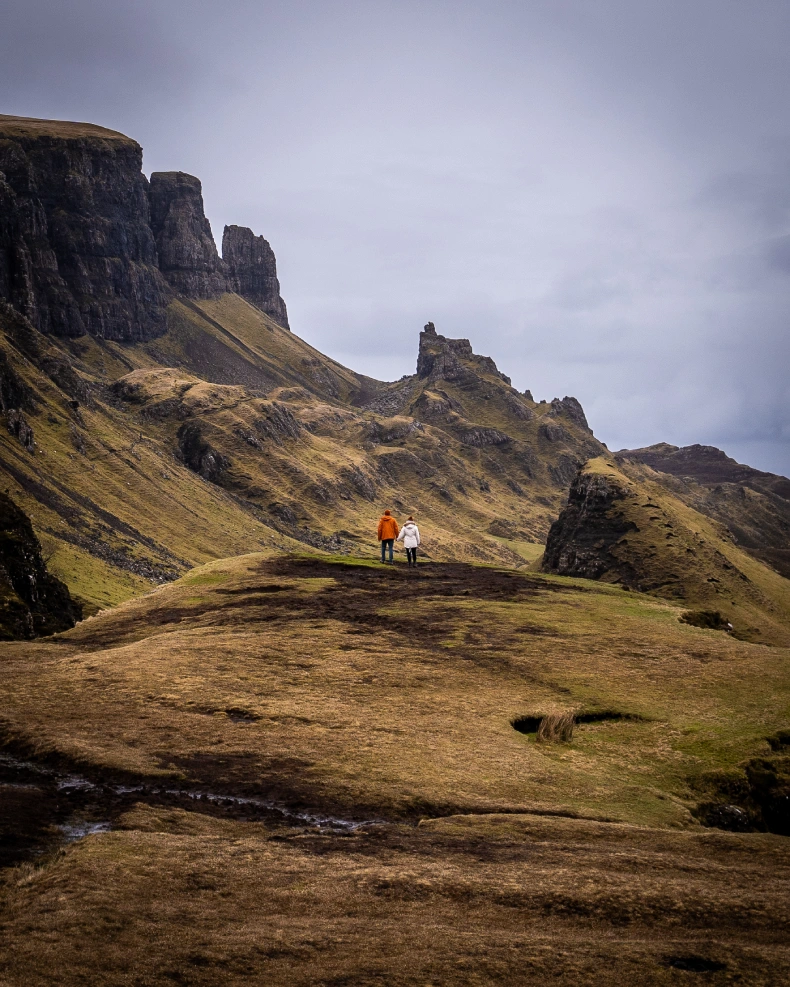
- The Quiraing: A geological masterpiece, but the single-track road leading up to the car park can be challenging for large vehicles, and parking is notoriously difficult.
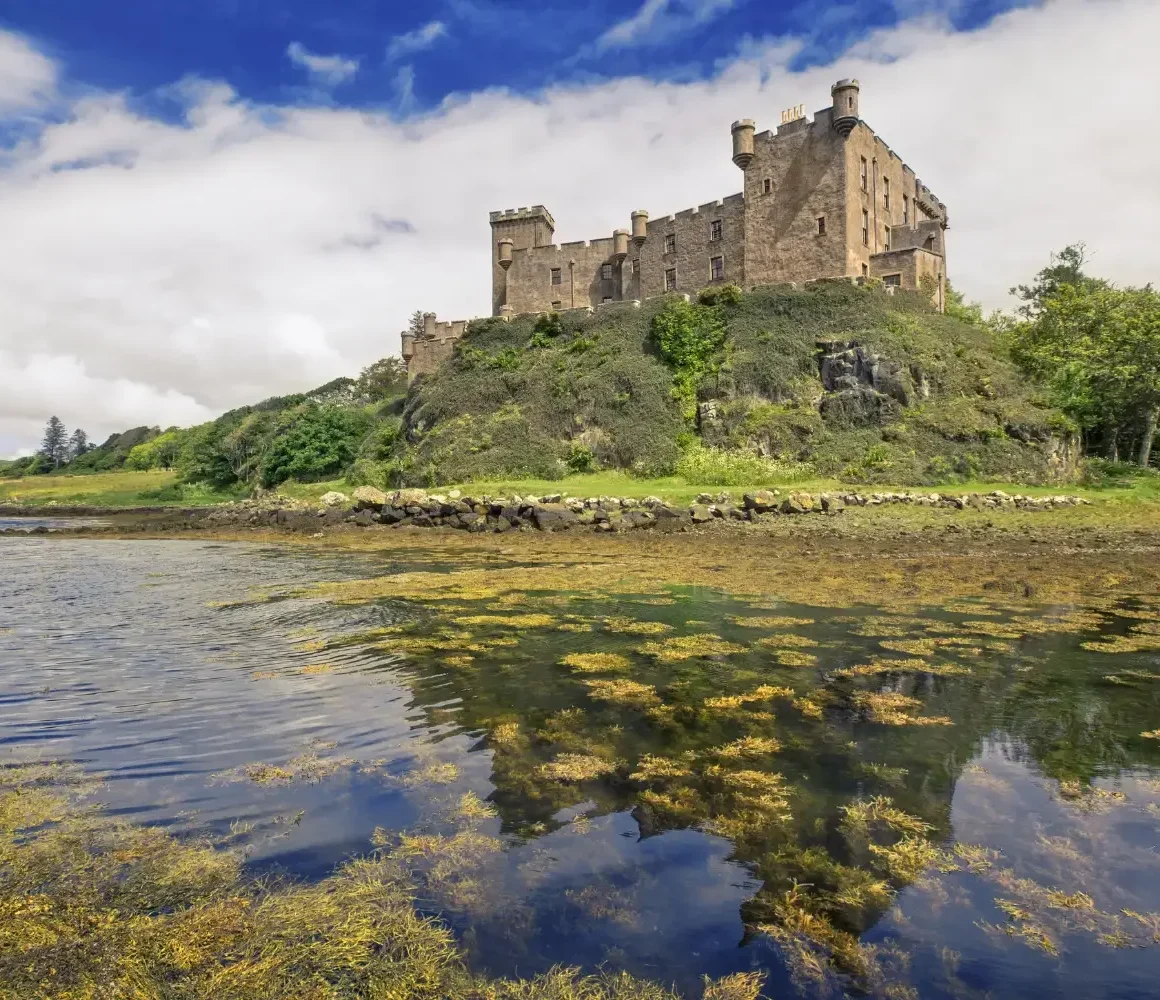
- Dunvegan and the North West Coast (B884/B886): Visit Dunvegan Castle and Gardens, the ancestral home of the Clan MacLeod, or tour the world-famous Talisker Distillery on the shores of Loch Harport. The road out to Neist Point Lighthouse (B884) is single-track and requires patience!
Mastering Single-Track Roads
Skye is crisscrossed by these roads, which are integral to accessing key sites.
Passing Places
These short, paved pull-ins allow vehicles travelling in the opposite direction to pass. They are not for parking, photography, or stopping to admire the view.
Etiquette
If a car is approaching, the person closest to a passing place should pull in.
If the passing place is on your left, pull in and wait.
If the passing place is on your right, pull across and wait.
Always give a quick wave (a simple lift of the hand from the steering wheel) to thank the driver who pulled in for you. This simple gesture is crucial to local courtesy!
Pace
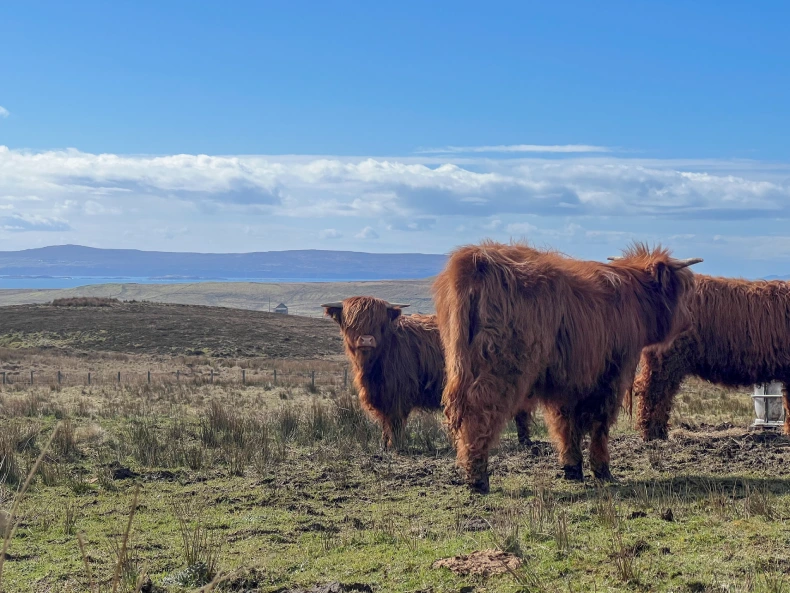
Drive slowly. There are often sheep, deer, or local traffic (which moves fast!) around blind bends.
The Campervan Guide: Legal Considerations
Skye is under immense pressure from over-tourism, particularly poorly managed “wild camping”!
- The Law: While Scotland has liberal access rights (the Land Reform Act), these do not apply to motorised vehicles. You cannot legally park wherever you like and stay overnight – the law generally applies to lightweight camping (tents).
- The Problem: The vast majority of laybys and roadside spots are now clearly signed with “No Overnight Parking” notices. Ignore these signs, and you risk a fine or, worse, escalating local tensions.
- The Solution: Use designated sites. Always plan to use official campsites, certified farm stops (often via apps like BritStops or local listings), or designated overnight parking areas (some villages offer pay-to-stay spots). Booking campsites in advance is non-negotiable from April to October.
The Isle of Skye: Local Customs
Skye is home to a vibrant, working community, not just a tourist playground. Your behaviour directly impacts their quality of life.
Gaelic and Culture
- Language: Skye (An t-Eilean Sgitheanach) is a heartland of the Gaelic language. You will see road signs in both English and Gaelic. Though English is spoken everywhere, showing an interest in local culture is always appreciated!
- The Sabbath: While less strict than in previous decades, Sunday remains a quiet day in many smaller villages. Respect the local atmosphere; avoid loud activities or excessive noise.
The Environment
- Leave No Trace: This principle is non-negotiable: take all your rubbish with you. If a bin is full, take the waste to the next town or back to the mainland.
- Fences and Gates: If you open a farm gate (e.g., to access a walking trail), always close it behind you, even if you see no animals nearby. This is to contain livestock!
- The Skye Bridge Toll: The toll for the bridge (connecting Kyle of Lochalsh to Kyleakin) was abolished in 2004, so crossing is now free!
Supporting the Local Economy
While supermarket chains exist in Portree, seek out local businesses:
- Buy Local: Visit small bakeries, independent craft shops, and local seafood shacks.
- Eat Out: Try traditional pubs and restaurants. Booking ahead is essential for dinner in Portree.
- Visitor Centres: Use visitor centres for reliable local information and book tours or activities directly with local operators.
Want Help Planning Your Trip?
If you’d like a second opinion or help tailoring the route to your exact needs, we offer personalised trip planning calls.
These are ideal if:
It’s your first time on the route
You’re short on time
You’re travelling by campervan
You want reassurance before booking
You’ll speak directly with people who’ve toured the Isle of Skye themselves and understand what works in practice – not just in theory!
👉 Book a planning call
Ready to Take the Next Step?
You don’t need to have everything figured out at once. Start with a clear understanding of the route, choose a pace that feels comfortable, and build from there.
From here, you can:
👉 Hire a campervan suited for the Isle of Skye