But once you’ve decided on this epic tour, a crucial question arises: How will you conquer the legendary ferry routes and the winding A-roads? Should you embrace the freedom of a campervan, or stick to the nimble convenience of a car?
Both options offer a spectacular experience, but they suit different travel styles, budgets, and levels of adventure tolerance! If you’re feeling overwhelmed, don’t fret – our guide is here to help!
Grab a seat and a cup of tea (or a dram of peaty island whisky) and let’s dive into a factual, fun, and authentic comparison to help you choose your perfect Hebridean ride!
The ferry system is the lifeblood of the Outer Hebrides, and is operated by Caledonian MacBrayne (CalMac). Understanding how the ferries operate is crucial for planning your trip.
Main Ferry Routes
Ullapool to Stornoway (Lewis): This is the most popular route, taking around 2 hours 45 minutes. Stornoway is the largest town in the Outer Hebrides.
Uig (Skye) to Tarbert (Harris)/Lochmaddy (North Uist): This route offers flexibility, allowing you to start your island-hopping adventure in either Harris or the Uists. Use Skye as a springboard!
Oban to Barra/South Uist: These longer crossings are great if you want to start at the southern end of the islands and work your way north.
Inter-Island Ferries: Once you’re on the islands, CalMac also runs smaller ferries between islands like Harris & Lewis, North Uist & Harris, Benbecula & North Uist, and South Uist & Eriskay. These are essential for island hopping!
Ferry Booking Tips
Book Well in Advance: Especially if you’re travelling with a vehicle during peak season (June-August), ferries fill up fast. Book months ahead!
Consider a Hopscotch Ticket: CalMac offers “Hopscotch” tickets, which are multi-leg fares that can save you money if you’re planning on island hopping.
Check for Disruptions: Weather can significantly impact ferry schedules, especially during the winter months. Always check the CalMac website for service updates before and during your trip.
Arrive Early: Even if you have a booking, aim to arrive at the ferry terminal at least 30-45 minutes before departure!
The Contenders: Car/Accommodation vs. The Campervan
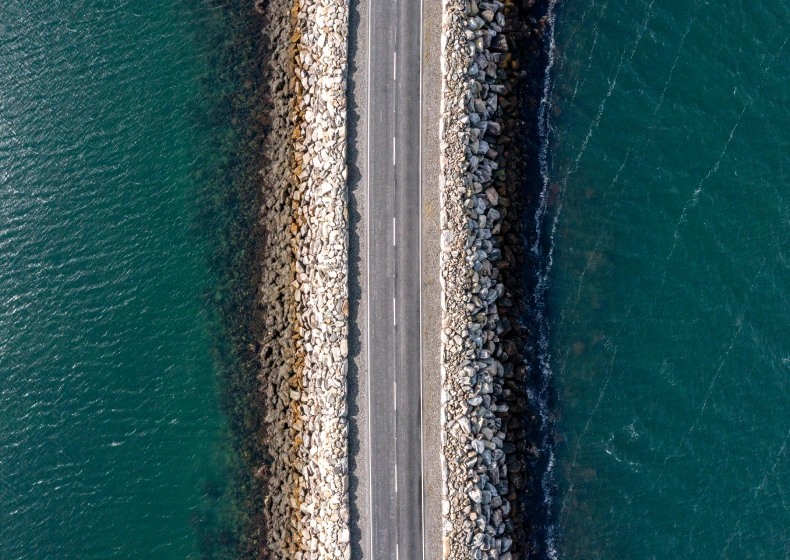
The Outer Hebrides are connected by the spectacular spine of the A859 and its offshoots, famously linked by CalMac ferries. The choice of vehicle fundamentally changes your relationship with the journey!
The Car: Flexibility & Local Immersion
Choosing a car means separating travel from accommodation. You’ll drive, then most likely stay in Bed and Breakfasts, self-catering cottages, or hotels.
Pros of the Car
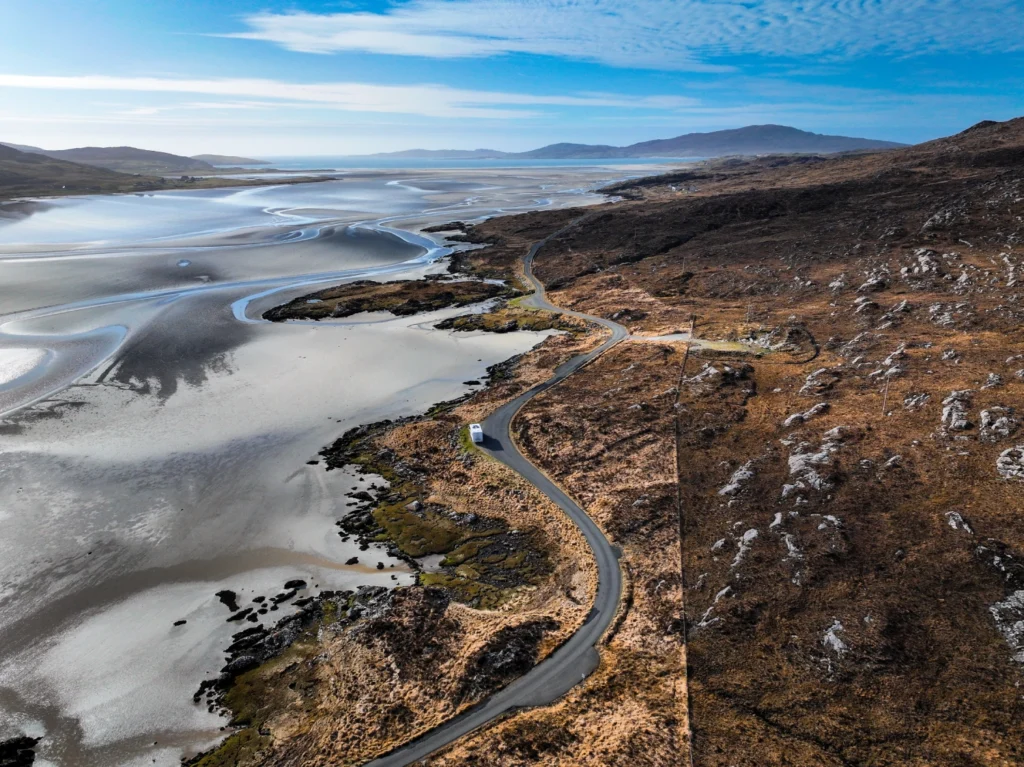
Agility is King: Hebridean roads, while generally excellent, can be narrow, particularly when heading to secluded beaches or small villages. A car is more straightforward to manoeuvre, park in tight spots, and navigate single-track roads with passing places. You’ll spend less time reversing for oncoming traffic!
Cost-Effective Travel (Sometimes): The main savings come from the ferries. CalMac ferry fares are significantly lower for standard cars (under 5m long) than for campervans (which are often charged at the higher commercial vehicle rates, especially if over 6m). This is where the budget difference usually begins.
Authentic Local Stays: Staying in B&Bs or local hotels offers a genuine chance to meet islanders, hear local gossip, and enjoy a traditional full Scottish breakfast cooked for you. It’s an essential part of the cultural experience!
Ease of Day Trips: Once parked at your accommodation, you can drive to the beach for the sunset or a short hike without having to pack your entire home.
Cons of the Car
Booking Dependency: You must book accommodation months in advance, particularly during peak season (May-September). Available rooms are limited, and spontaneous travel is nearly impossible.
The Daily Grind: If you’re island hopping daily (and you likely will be), you face the chore of checking in and out, packing, and unpacking.
Higher Overall Cost (If Budgeting): While the ferry is cheaper, the combined cost of B&Bs, hotels, and self-catering stays often exceeds the price of a campervan rental, especially for longer trips!
In Need of a Trusty Hebridean Steed?
Check out our campervan rental service, designed by adventurers - for adventurers!
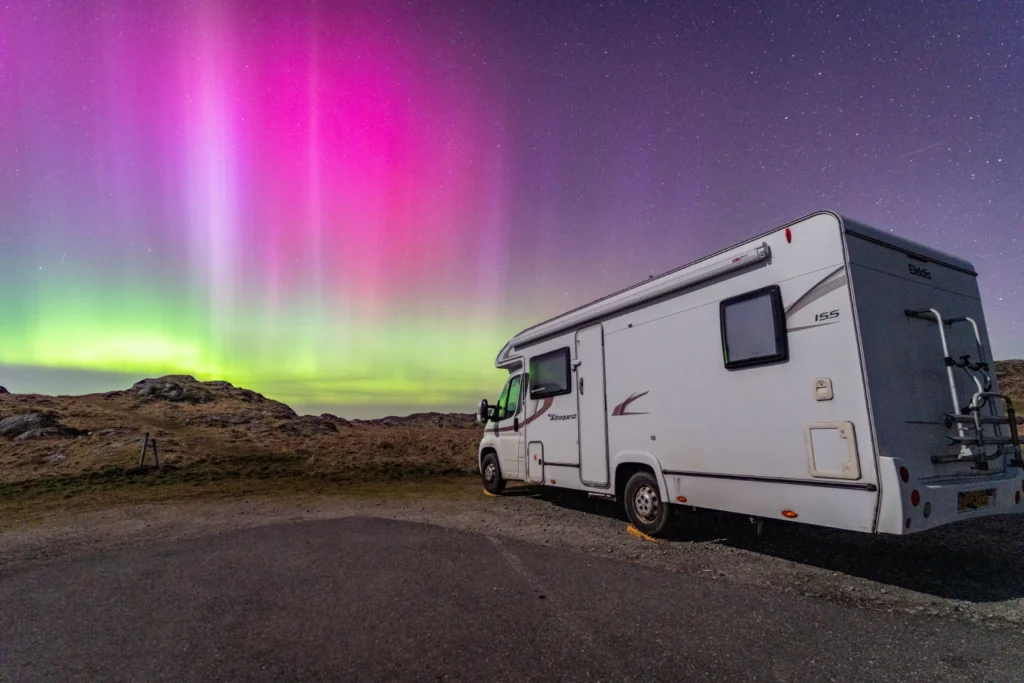
The campervan, or motorhome, turns your journey into an integrated experience. Your bed, kitchen, and transport are one!
Pros of the Campervan
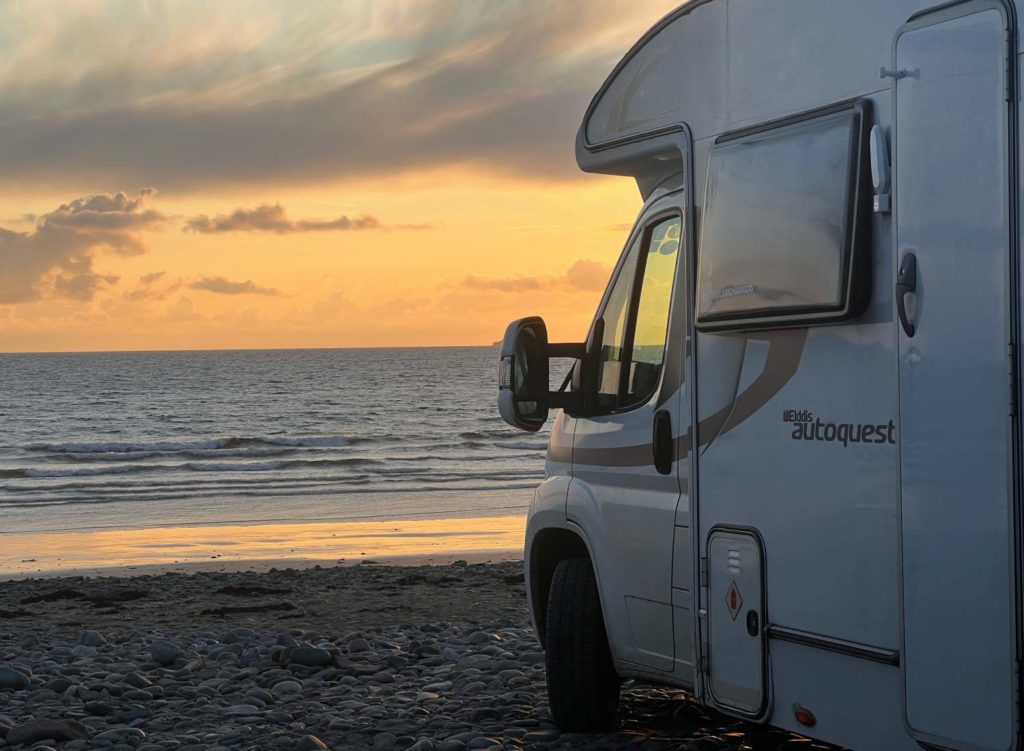
Unrivalled Freedom: This is the campervan’s greatest asset. Awaken to the sound of the Atlantic, cook breakfast overlooking a loch, and decide your next destination over an impromptu coffee. There’s no rush to check in by 4 pm – your schedule is yours!
Cost Control: Beyond the initial rental and ferry fees, your food costs are lower because you can cook most meals. You save on accommodation entirely!
The Comfort Zone: Having your own toilet, shower (depending on size), and a familiar bed is a significant psychological benefit. Essential for those inevitable damp island days!
“Wild Camping” Magic: Scotland has excellent access rights, meaning you can park and stay in many stunning, remote camping spots (provided you strictly adhere to the Scottish Outdoor Access Code – more on that below!)
Cons of the Campervan
The Ferry Fine: As mentioned, higher ferry costs could be a significant strain on the budget. This often requires careful itinerary planning to minimise island hops!
Limited Maneuvrability: Driving a larger vehicle on single-track roads requires confidence and courtesy. Finding large parking spaces in main towns (such as Stornoway) can be challenging!
Waste Management: You must be scrupulous about responsible waste disposal (grey water and chemical toilets). Designated disposal points (often at campsites or filling stations) are available but require planning. Never dump waste randomly!
Limited Campgrounds: The Hebrides have fewer formal campsites than the mainland, meaning you’ll rely more on the spirit of “wild camping” (which actually means finding a suitable, discrete spot and leaving no trace!)
The choice ultimately boils down to your tolerance for logistics, your budget distribution, and your desired travel pace.
Choose the Car If:
You value comfort and local interaction over raw solitude.
Your trip is shorter (7 days or less), making B&Bs more cost-effective.
You are travelling solo or as a couple and want maximum manoeuvrability.
You can plan your itinerary and book accommodation six months in advance.
Choose the Campervan If:
Freedom and spontaneity are paramount. You want to chase the light and park where the view is best.
Your trip is more extended (7-10 days or more), where the per-night saving on accommodation starts to offset the high ferry costs. We love an indulgent meander in our campervan!
You are comfortable driving a large vehicle and managing your own utilities.
You are happy to stay on informal ‘overnight parking’ spots or practice responsible wild camping.
Looking For The Perfect Guide?
Our long-awaited guidebook & map bundles have arrived!
Whichever vehicle you choose, remember that the Outer Hebrides is a fragile, tight-knit community.
If driving a campervan, remember the mantra: Leave No Trace. Park considerately, use proper disposal points, and treat the islands with the respect they deserve. Local services are limited; don’t overburden them.
If driving a car, be courteous to locals and other tourists. Use passing places correctly (pull in on the left, regardless of direction of travel, if it’s safe to do so) and wave a friendly thank you.
Your Hebridean Road Trip: Take The Wheel!
So, there you have it! Ultimately, your choice of transport depends on what your particular Hebridean getaway requires: whether you favour budget, speed or creature comforts on your next trip out to the Western Isles, remember to respect local rules and laws when behind the wheel.
We cannot recommend using a campervan enough, though – our travels across this far-flung corner of Scotland would never have been as unforgettable if not for the sanctuary of our home on wheels!
But regardless of how you plan to tour, the magic of the Hebrides is undeniable. Whether you’re racing past the machair flowers in a car or watching the waves lap against a golden shore from your campervan window, you’re embarking on a journey that will stay with you long after the ferry docks back on the mainland.