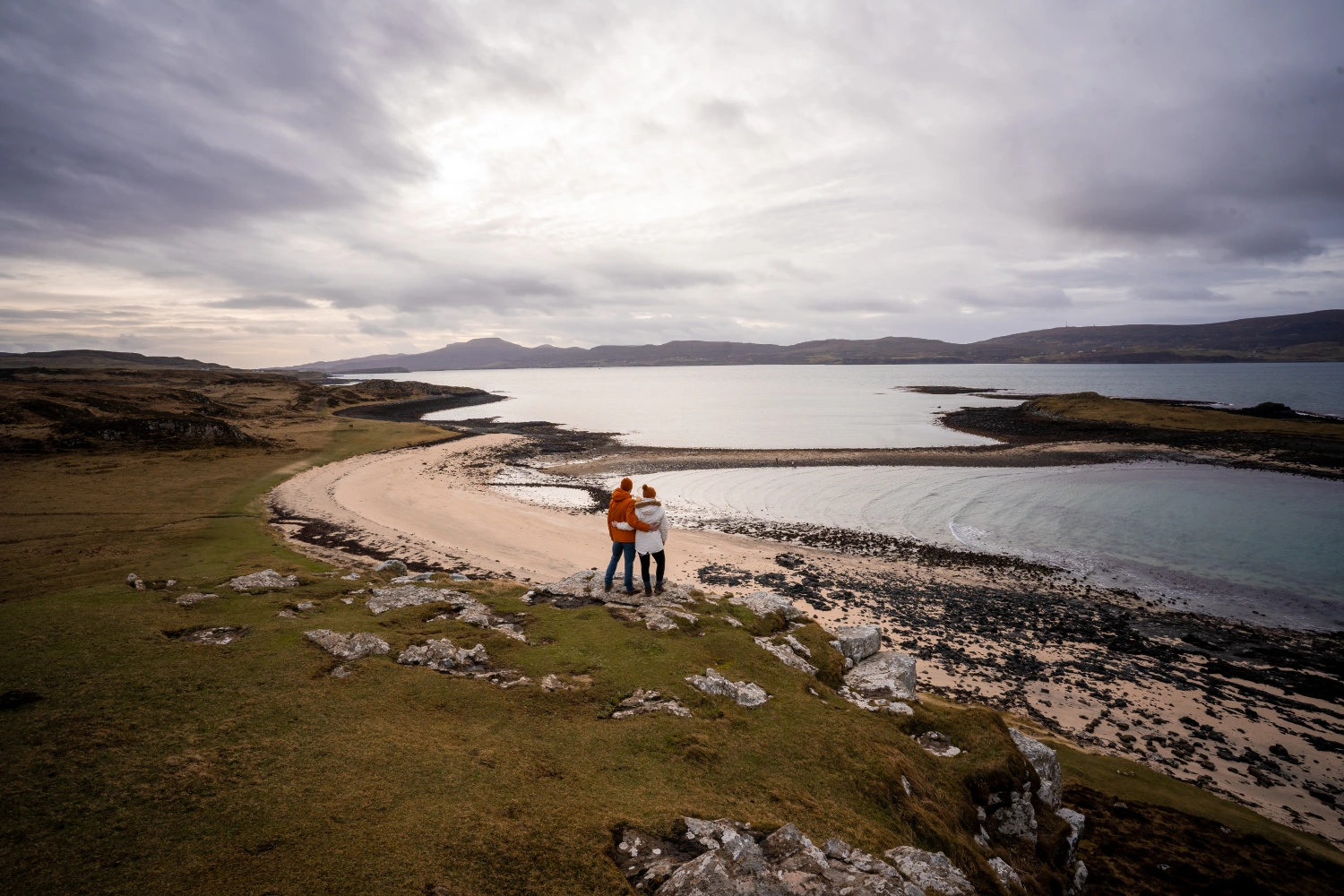
Skye’s Waternish Peninsula: The Top Things To Do
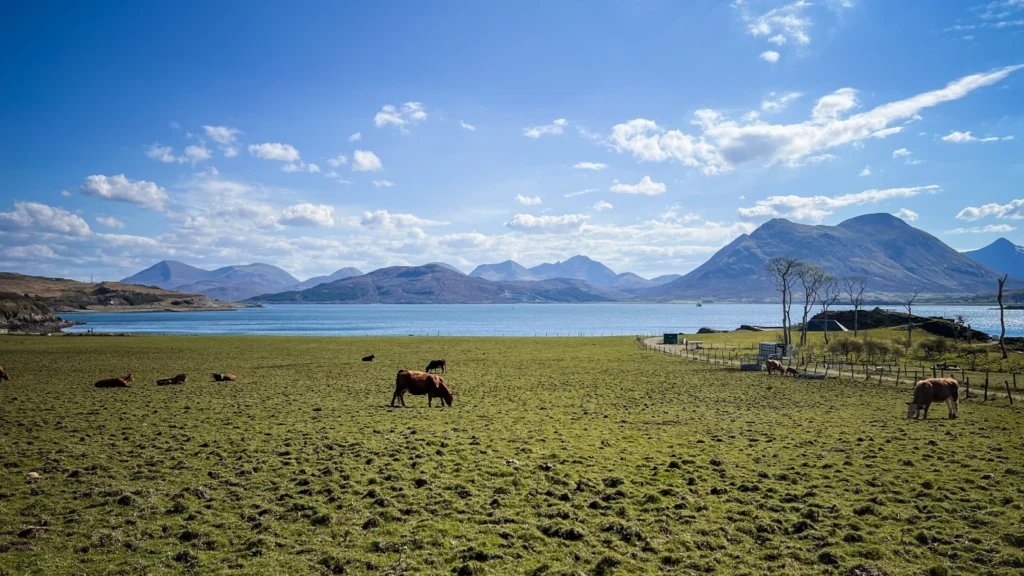
The Isle of Skye draws millions, all chasing the same magnificent, but often crowded, sights: the Old Man of Storr, the Fairy Pools, the Quiraing. Yet, on the northwest edge of the island, there is a long, slender finger of land that often escapes the mass attention – the Waternish peninsula. This is Skye at its most authentic, with plenty to see and do: a place of rolling hills, deep-rooted clan history, and uninterrupted views across to the Outer Hebrides.
Waternish (Scottish Gaelic: Bhatairnis) is a small microcosm of Skye itself. It stretches out into the Atlantic between Loch Snizort and Loch Dunvegan, defined by a stunning coastline and punctuated by small, tight-knit communities like Stein, Gillen, and Halistra. It’s known for its extraordinary sunsets, its thriving local craft scene, and a profound sense of peaceful solitude.
This guide will take you through the must-see spots of Waternish, celebrate its historical depth, and explain why packing your van and heading to this quiet corner during the bracing beauty of winter and early spring is the ultimate Hebridean adventure.
Ready? Good!
Let’s get going.
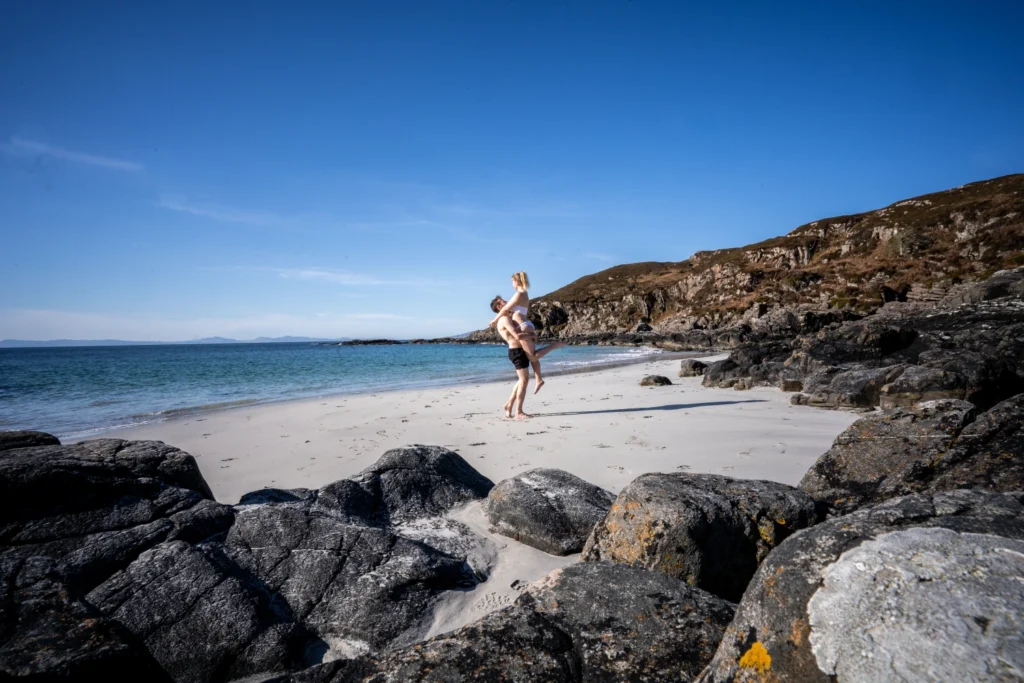
Table of Contents
Planning Your Trip
We use the below booking platforms to plan our trips. We hope you find them useful too!
Skye in Winter: Why Use a Campervan?
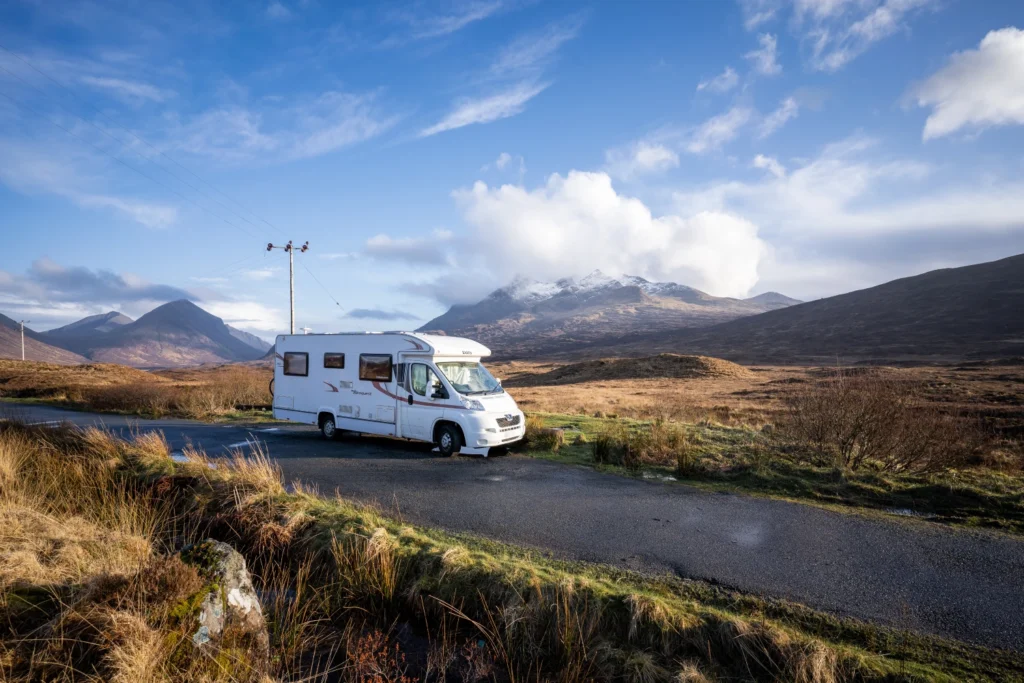
The allure of Waternish is amplified by two factors: a self-contained campervan and the dramatic solitude of the off-season (November to April).
1. Embrace the Elements
Skye in the winter can be fierce, but a campervan transforms this challenge into comfort.
- Weather: Sudden squalls, intense cold, and high winds are common this time of year, but once you reach your home-on-wheels? Instant Warmth! Heater on, kettle boiling – a perfect retreat after a coastal walk or frosty castle.
- Daylight: Short days (especially in December and January) mean sunrise/sunset happen at manageable times, but don’t worry – enjoy the sunset, then walk 10 seconds to your mobile haven.
- Traffic: Far less traffic than in the summer, making navigation on single-track roads and parking far easier and safer.
- Costs: Fewer tourists mean off-season rates for ferries, specific campsites, and attractions.
In Need of a Hebridean Steed?
2. Authentic Connection
The Waternish experience thrives in serenity. In August, Stein Inn might be packed, and parking near Trumpan Church will be hard to find. In March, you’ll likely have entire attractions to yourself!
- Local Life: The local communities are operating at their natural, slower pace. Engaging with the people at the Stein Inn or the few local shops (check opening hours!) is easier and more rewarding. You feel welcomed as a visitor, not just processed as a tourist.
- Responsible Wild Camping: The Outer Hebrides and Skye embrace responsible ‘wild camping’ (following the Scottish Outdoor Access Code). Waternish offers some incredible, secluded coastal spots, so always ensure you leave no trace, respect private/crofting land, and use common sense!
3. Sea & Skye
Waternish is arguably Skye’s best vantage point for viewing the North Atlantic’s seascapes.
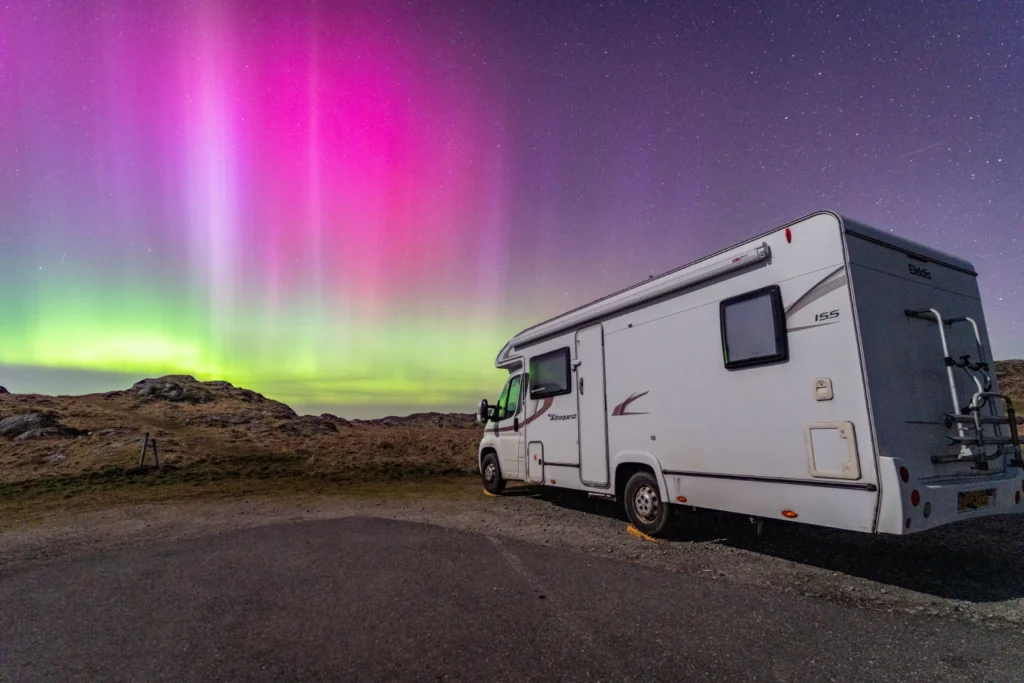
- Northern Lights (Aurora Borealis): During the dark winter months, especially between October and March, the Waternish peninsula is far enough north and dark enough to offer excellent chances of seeing the Aurora. Parking your van at the tip of the peninsula and simply waiting is an unforgettable winter reward.
- Storm Watching: If the weather is truly robust, there is immense satisfaction in watching the colossal Atlantic rollers crash against the cliffs from the safety and warmth of your van!
More from Skye!


Waternish: Things To See & Do
Waternish might be small, but it punches above its weight in attractions, blending modern crafts with ancient ruins.
1. Stein: The Picturesque Harbour
Stein is the postcard village of Waternish. Built in the late 18th century as a planned fishing settlement by the British Fisheries Society, it features a beautiful, white-washed row of houses lining a sheltered bay:
- The Stein Inn: This is Skye’s oldest inn, dating back to 1790. In winter, its low ceilings, roaring fire, and historical hospitality make it an essential stop. It offers excellent pub fare (try the seafood!) and an extensive whisky selection. Parking your van nearby and walking into this local haven is the definition of a warm welcome!
- The Pier: Take a walk out onto the old stone pier for incredible views back across Loch Bay. In the quiet season, you might see seals hauled out on the rocks or a solitary fishing boat!
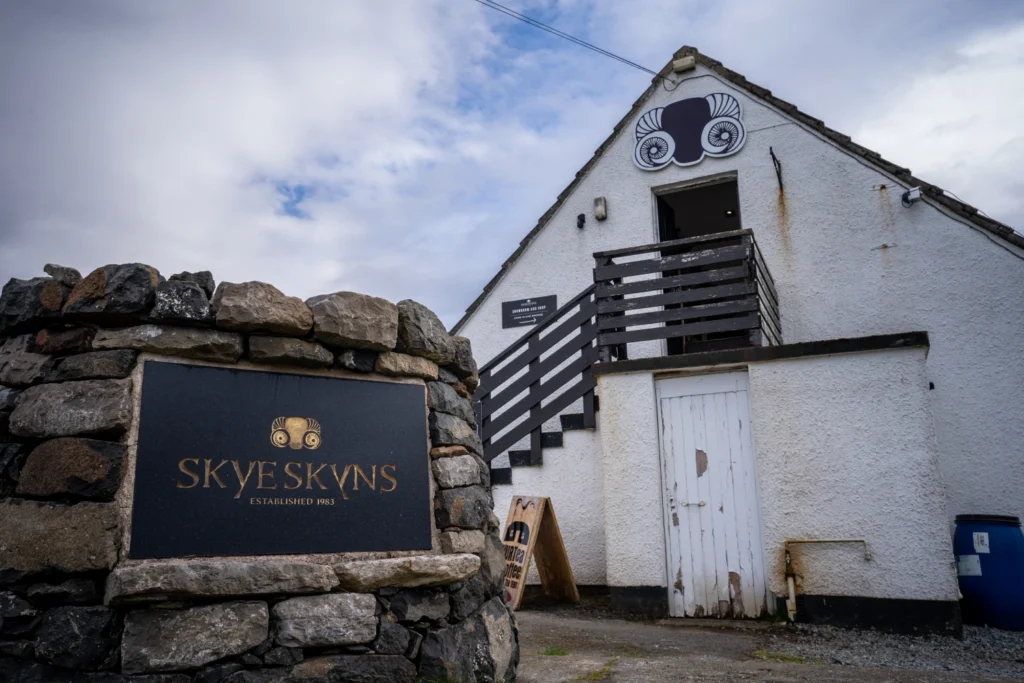
- Skyeskyns: Visit the island’s last working sheepskin tannery and perhaps take home a unique souvenir from this family-run enterprise!
2. Dunvegan Castle & Gardens (Near Waternish)
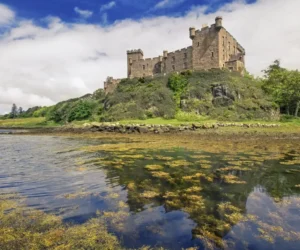
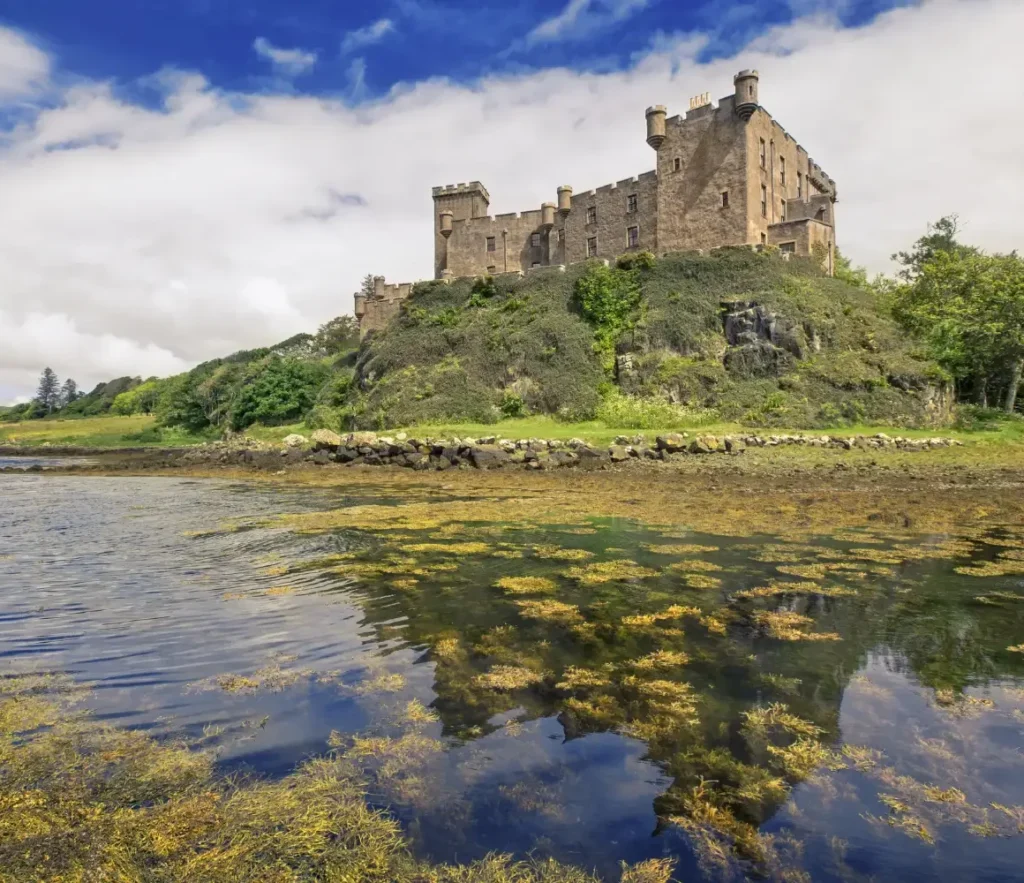
While not strictly on the peninsula, Dunvegan Castle is the gateway attraction and is deeply connected to the area’s clan history.
It is a historical Skye icon and the ancestral home of the Chiefs of Clan MacLeod for the last eight centuries! Inside, you can view the famous Fairy Flag, a mystical banner said to have supernatural powers, and a range of fascinating MacLeod heirlooms.
The castle and gardens often have reduced opening hours in the deepest winter, but early spring usually sees them open their gates to fewer visitors. The gardens, even when stark, offer beautiful coastal walks and views of the loch!
3. Trumpan Church
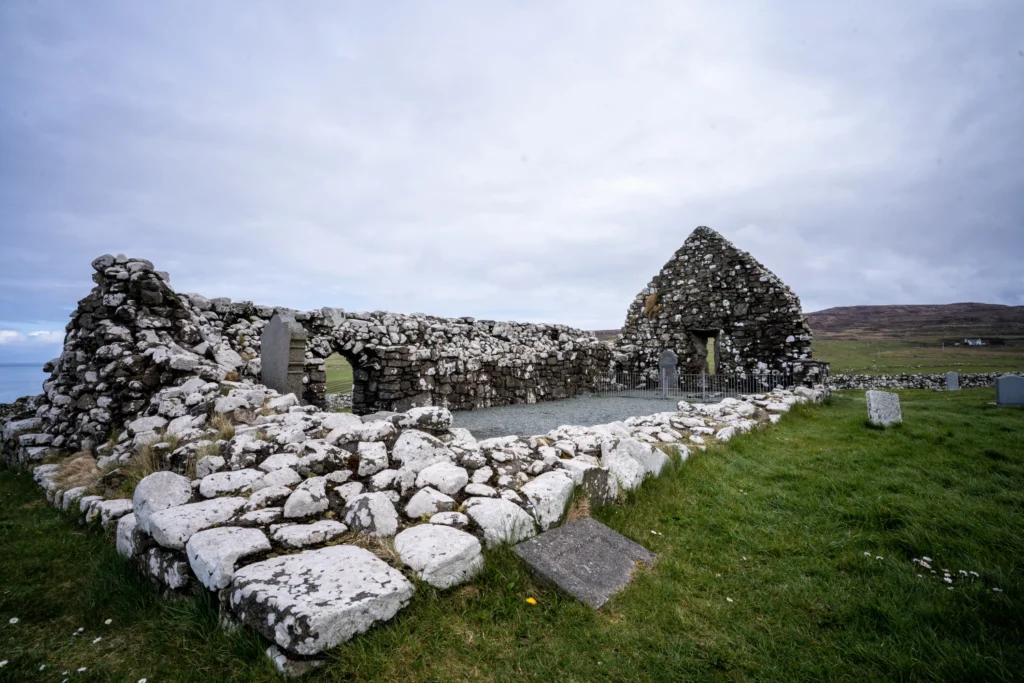
This site is the most atmospheric and historically significant spot on the peninsula, located right at Waternish’s northern tip. The ruined church stands starkly against the sea’s backdrop and is the site of a gruesome, pivotal historical event.
This site is known for The Trumpan Massacre (1578), a result of a ruthless feud between the Clan MacLeod of Skye and the Clan MacDonald of Uist. The latter arrived by boat and trapped the MacLeods inside the church, setting it alight. One MacLeod girl is said to have escaped to raise the alarm, leading to a brutal revenge counter-attack known as the Battle of the Spoiling of the Dyke.
Standing here, with the wind whipping around the ruin, is profoundly moving. It’s a tangible link to the wanton violence and clan loyalties that once dominated island life. It is the perfect winter spot for reflection – quiet, exposed, and deeply historical.
4. Waternish Point
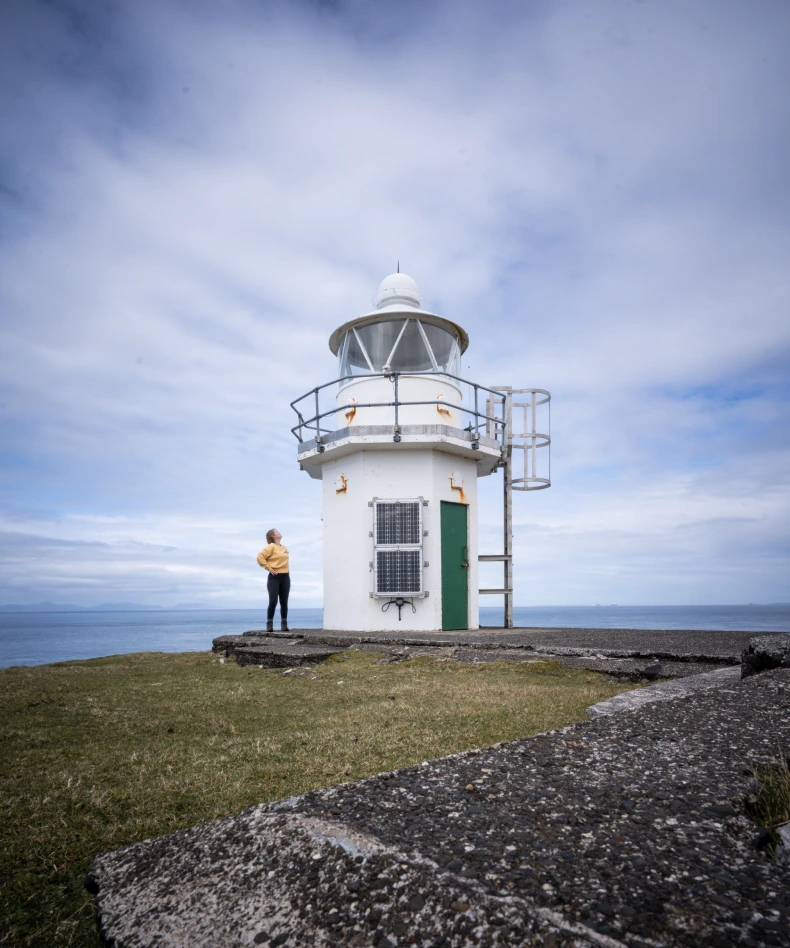
For a truly bracing walk, head to the end of the public road and take the path toward Waternish Point, where a small lighthouse marks the tip of the land.
This walk offers peerless, unbroken views across The Minch. On a clear day, you can easily see the islands of Harris and Lewis in the Outer Hebrides, and in winter, the seas are often stormy and dramatic, adding to the majesty and drama of the coastline. It’s also an excellent spot for watching seabirds!
5. Coral Beach (Claigan)
The breathtaking beach near the township of Claigan has white ‘sand’ that is actually composed of dried, calcified red seaweed called maerl – a truly unique and astonishing sight!
The shimmering turquoise water and views out to the nearby islands of the Hebrides make this spot feel less like Scotland and more like the Caribbean (minus the guaranteed sunshine, of course!). It’s a gentle 20-minute walk from the parking area, making it the perfect spot for a picnic or a dip for those brave enough!
6. The Fairy Bridge
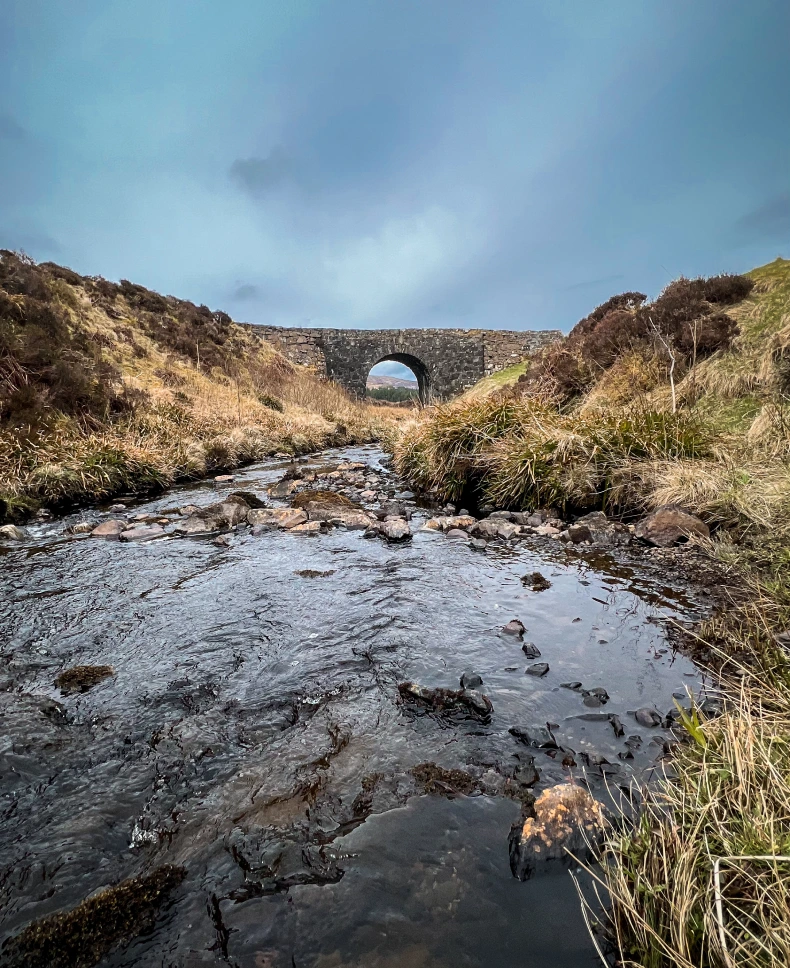
The location is famously associated with the final meeting between a MacLeod Chief and his fairy wife, as upon her necessary return to her realm, she reportedly pledged eternal protection to the clan (many believe this to be the origin of the Fairy Flag of Dunvegan). Consequently, the bridge is widely regarded as the melancholic site of their farewell!
Regardless of historical veracity, the tale has made this structure a cultural touchstone (literally!). The setting profoundly illustrates the deep connection between Skye’s landscape and its mythical heritage – it immediately provides a palpable sense of Hebridean mystique and essentially serves as a springboard for visitors interested in exploring Skye’s many mist-wreathed myths!
Posts We Think You'll Love!
Skye’s Waternish Peninsula: Campervan Tips
- Fuel: Top up in Portree or Dunvegan. Fuel stations on Waternish are rare/non-existent!
- Water & Waste: Formal campsite facilities will be limited. Plan for self-sufficiency and responsible disposal!
- Tyres: The single-track roads can be icy or wet. Ensure your tyres are in good condition and drive slowly.
- Ferry: If crossing from the mainland via the Mallaig-Skye ferry, book well ahead, as winter services can be less frequent and weather-dependent.
The Isle of Skye: Waternish Awaits!
Waternish is a quiet corner with a loud history and a powerful, enduring spirit. It rewards the slow traveller, the history buff, and anyone seeking a genuine escape from the modern rush.
By choosing the self-contained freedom of a campervan and embracing the wild solitude of the cooler months, you are chasing true immersion over a simple vacation. Waternish in winter and spring is an adventure defined by dramatic beauty, cosy warmth, and historical drama – it’s Skye in a nutshell!
We say go north, go slow, and let this quiet corner of the Misty Isle reveal itself to you.
Happy travels!
Useful Links
- Isle of Skye – for local info!
- CalMac Ferries – book well in advance!
- Met Office – check the weather!
- Traffic Scotland – for route changes and updates.
- WalkHighlands – the best hiking trails and tips.
- Scottish Outdoor Access Code (SOAC) – be informed!
- Highlands2Hammocks (That’s us!) – for our online shop, other blogs, and brand-new campervan rental service.